








Hidden History – Facets of Subculture in Frankfurt Rhine-Main
18.04.2026 — 17.05.2026
Opening: 17 April 2026, 6 pm
Night of the Museums: 25 April 2026, 7 pm – 1 am (Hip Hop Night with Janina Jackson, Dascha Reimt, Gunnpassion, Momma Rose and DJ Raenah)
Annette Gloser (feat. Silke Thoss), Die Schmiere, Hannibal Tarkan Daldaban, Heiner Blum, Honji Wang, Labelstore, Leonard Kahlcke, Oguz Sen, Rushy Diamond, Schwarzi
Events and actions with/about Die Schmiere, Dr. Atmo (Amir Abadi), Elisa Garcon, Hannibal Tarkan Dalaban, Lobo Texas, Luzi Gehrisch, Mathias Weinfurter, Oskar von Miller Straße, Rushy Diamond
The Frankfurter Kunstverein invites the Diamant / Museum for Urban Culture, Offenbach to the Steinernes Haus at Römerberg. Developed through close collaboration, the project unfolds as a four-week cooperation featuring numerous actions, activations, and opportunities for participation.
Hidden History is more than an exhibition. It presents spaces of documentation and reflection on historical and contemporary positions of subversive and subcultural activity through installations, interactive environments, visual wall newspapers, collaborative wall drawings, tape art, performances, and video installations.
Which actors and activities have shaped the scene in Frankfurt–Offenbach–Rhine-Main in recent years? And how do they continue to influence the cultural fabric of the city today?
Culture is usually transmitted through lasting images and texts. Ephemeral and undocumented practices circulate through oral histories, myths, and stories, gradually fading and disappearing over time. This is not only true for distant cultures but also for our own age of information.
The recent cultural history of our region has not been shaped solely by institutions and forms of high culture, along with their networks and publics. Although certain aspects of subculture occasionally enter the cultural pages, beneath the surface there remains a vibrant culture of the street and the urban realm—often below the threshold of what is formally documented, yet highly influential within specific scenes.
Hidden History takes a look behind the scenes of the city and offers glimpses into a cultural sphere that remains hidden from many. This culture, too, has its masters, legends, and masterpieces. In Hidden History, we can discover them together.
The exhibition at the Frankfurter Kunstverein expands the cultural field of perception. Curated by Heiner Blum—who has actively fostered and made visible creative potential for decades—and developed in collaboration with the Kunstverein’s team, the project creates a lively and open platform for cultural research and activity.
The Frankfurter Kunstverein invites visitors to discover new perspectives and to participate playfully. A key component of Hidden History are performative events, lectures, guided tours, and concerts. For children and young people, an extensive workshop programme with artists from the exhibition offers opportunities to rediscover the city and its signs as a space of experience beyond digital habits, opening new analogue possibilities.
Over the course of four weeks, the Frankfurter Kunstverein transforms into a living archive of urban culture—searching for the history of the future.
To encourage visitors to return and experience the exhibition as well as the many performances, workshops, and special events multiple times, the Frankfurter Kunstverein offers reduced admission throughout the exhibition period: €5 per visit. Participation in events or guided tours during a visit is included. For more information, please read here.
Exhibition course
Annette Gloser
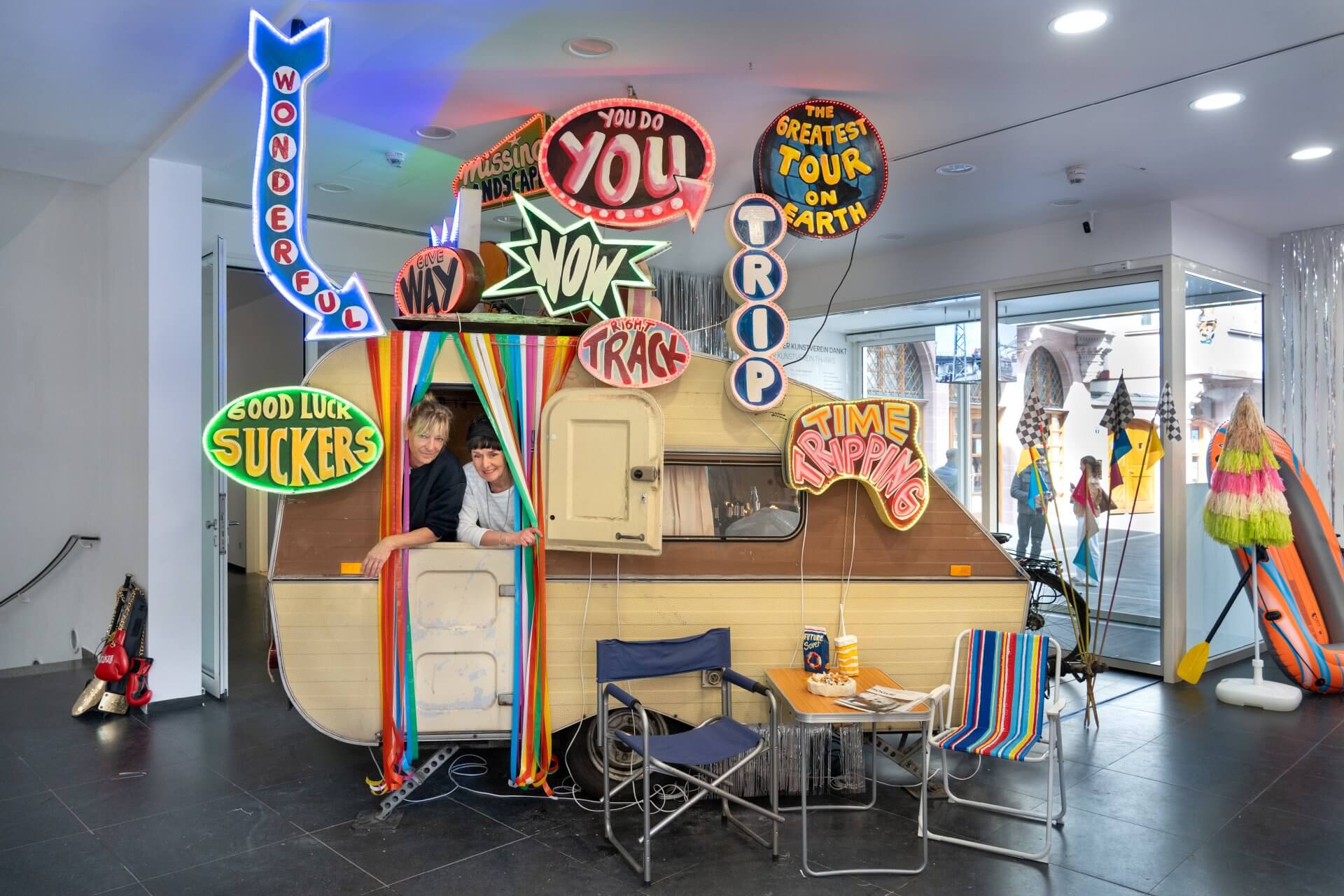
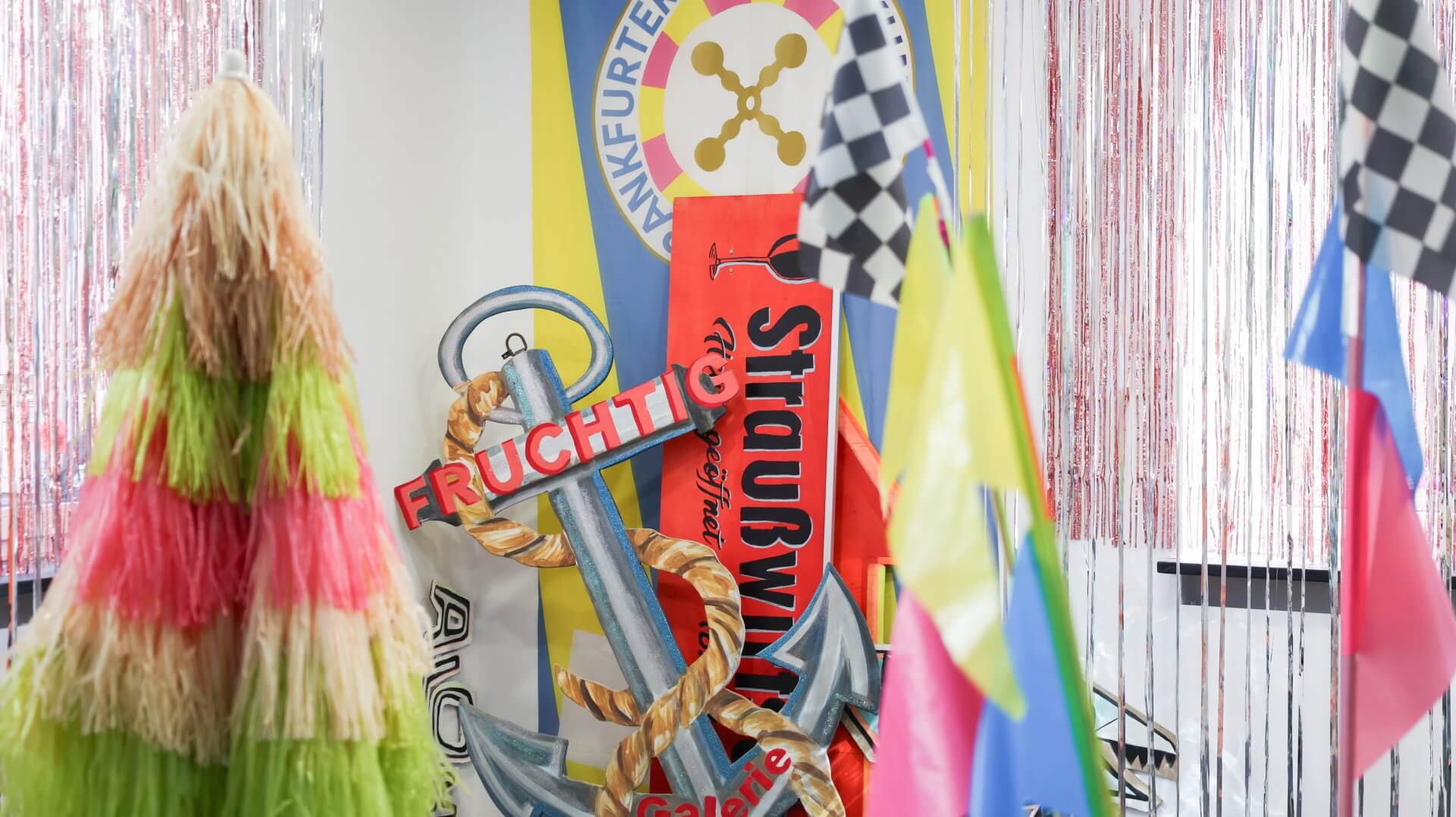
Annette Gloser opens the exhibition Hidden History at the Frankfurter Kunstverein with her installation Sierretta Nevada. Gloser has been one of the central protagonists of Frankfurt’s off-scene from the early 1990s to the present day. She is a pioneer in creating ever new, unconventional, temporary spaces where people come together to produce and experience art and culture in a free and experimental context. Her work represents a practice that organizes art independently of institutional and commercial frameworks. Projects such as Galerie Fruchtig, Muttertag, and Gartner’s remain deeply embedded in the memory of Frankfurt’s art scene.
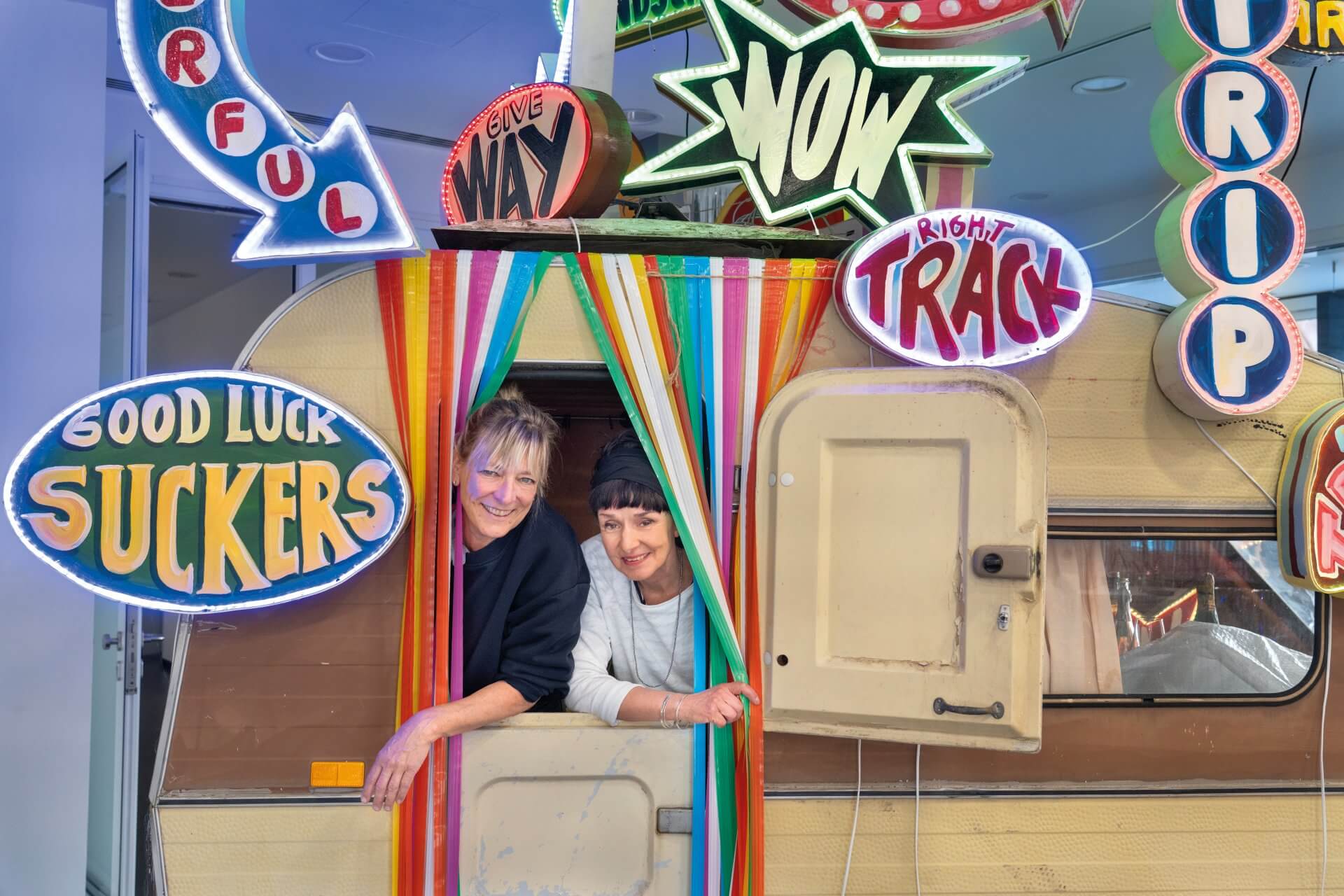
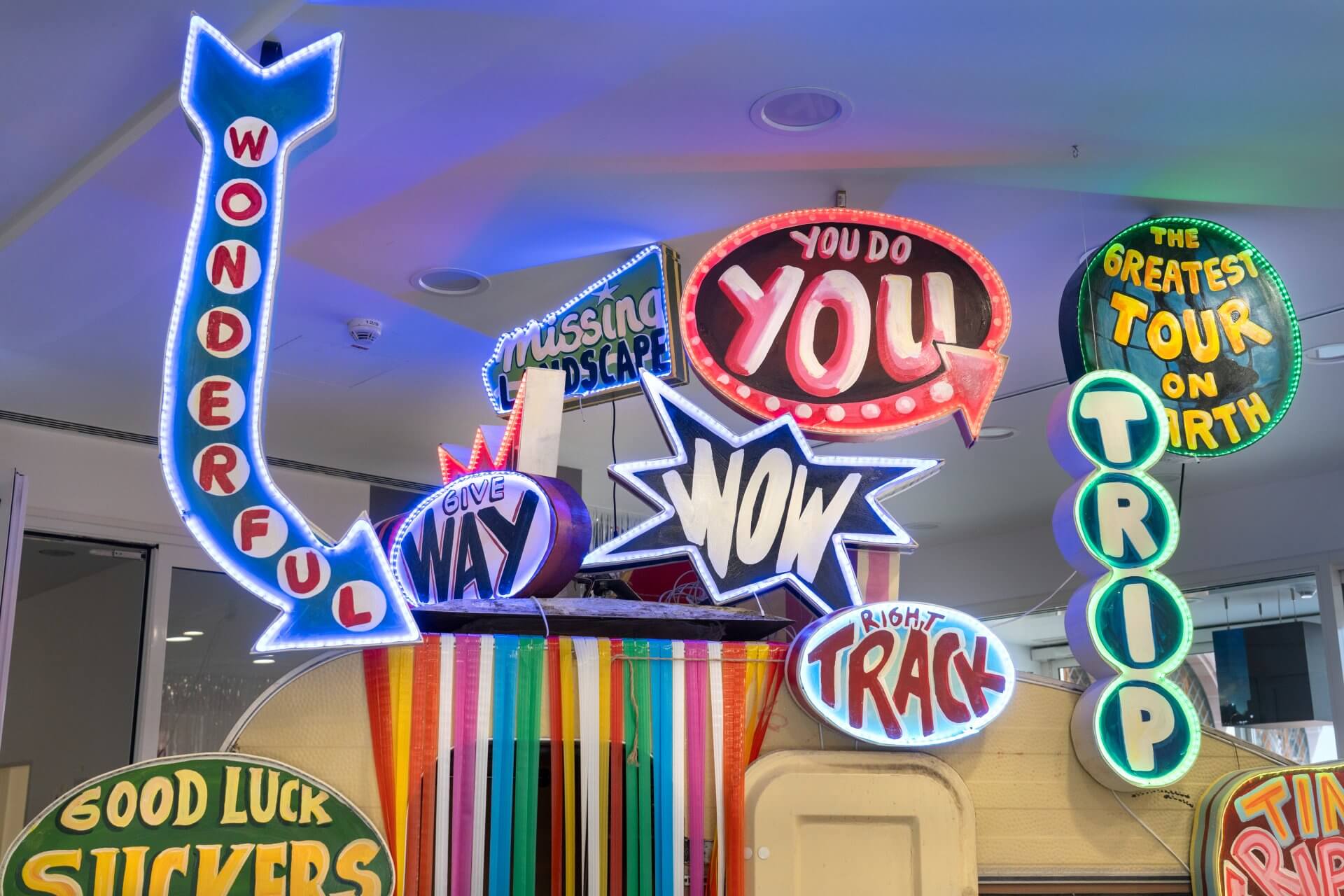
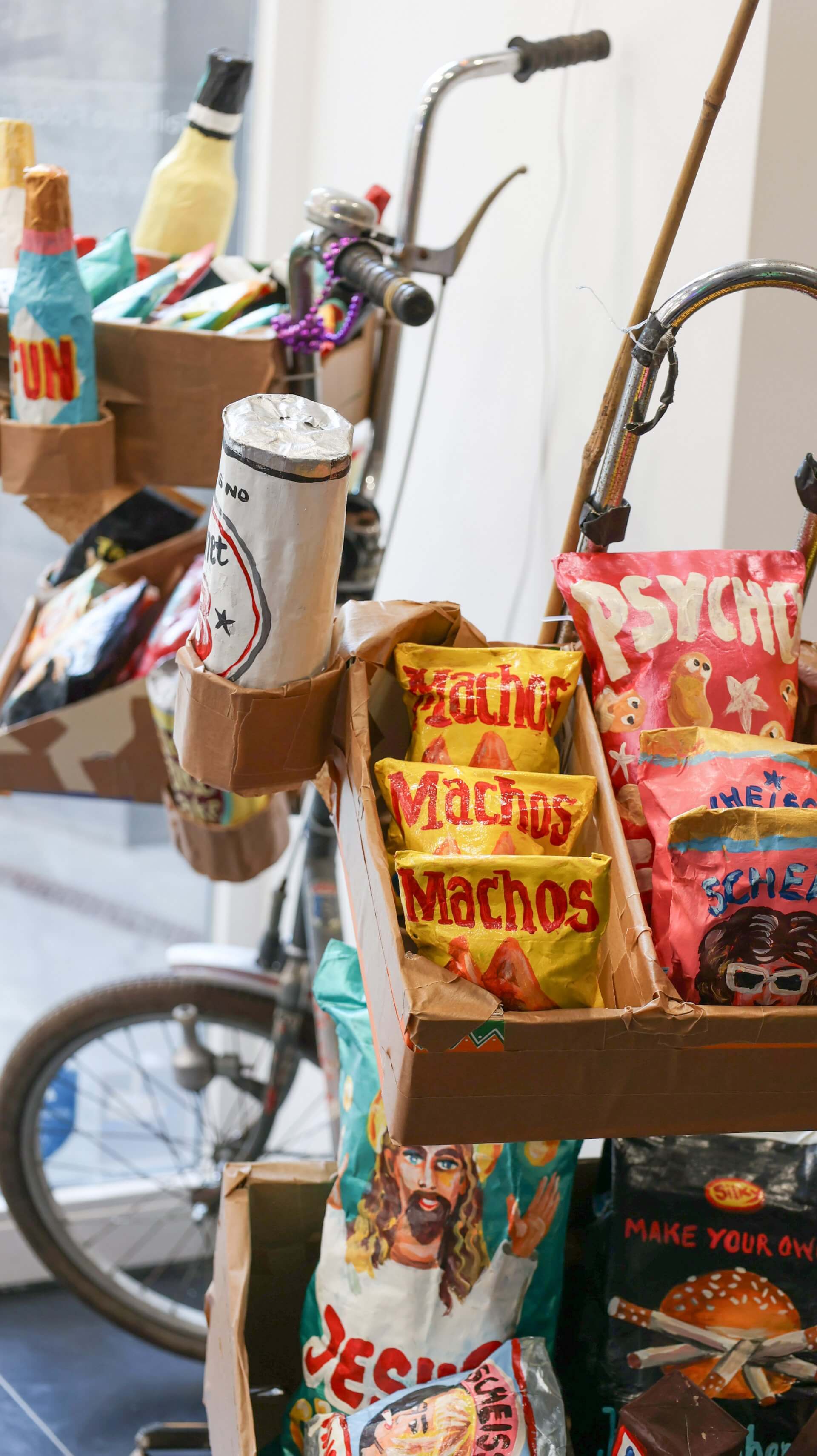
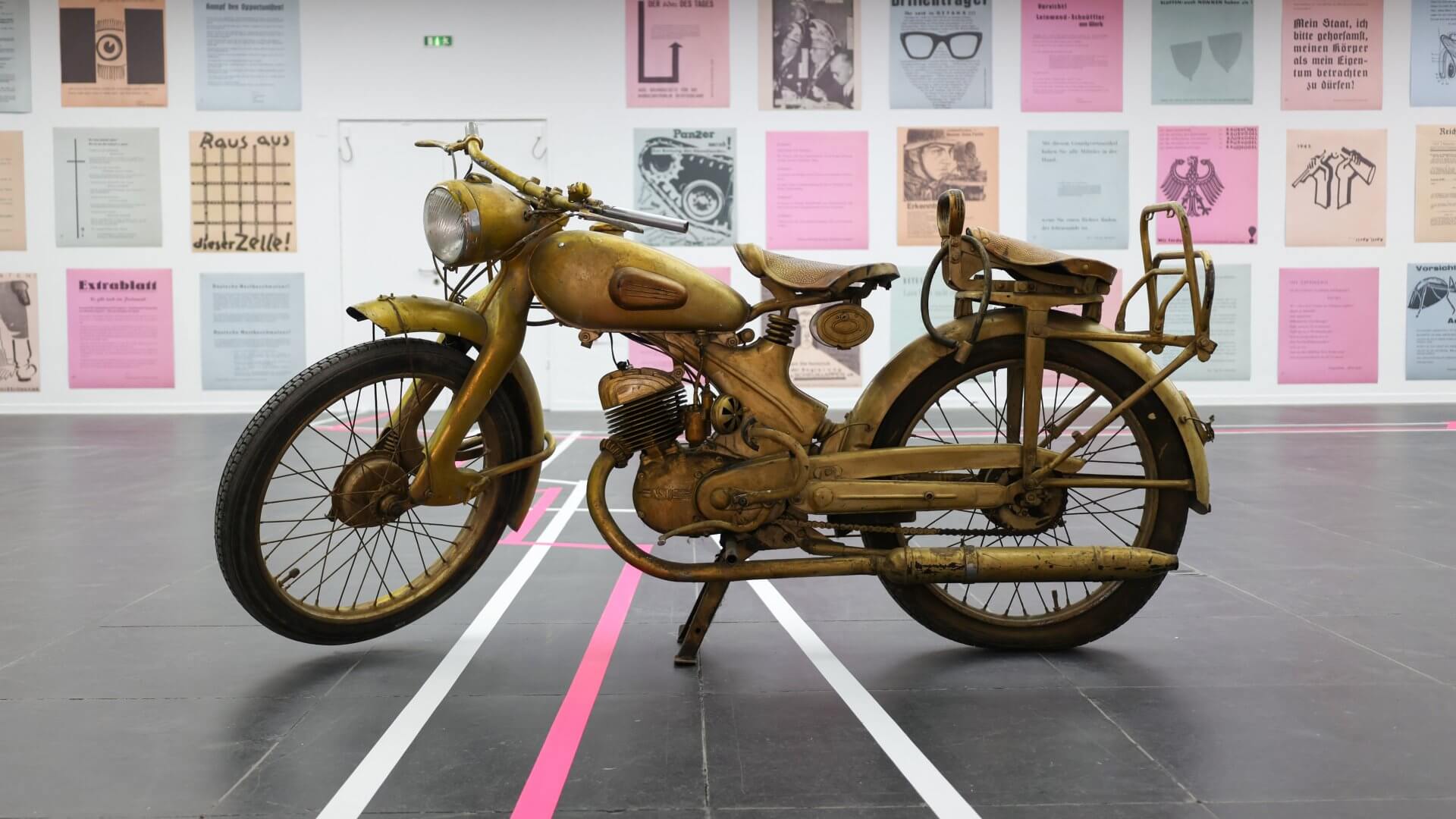
For Hidden History, Gloser has created an immersive spatial installation together with artist Silke Thoss. In the entrance area of the Frankfurter Kunstverein, they have constructed an environment featuring a caravan, camping furniture, and illuminated signs. The artists restage their 1990s action Sierretta Nevada Wanted!. The caravan functioned both as living space and exhibition venue, with which they travelled across Germany, stopping at subcultural sites to present the works of a fictional artist—artworks they themselves produced overnight. Constant departure and arrival, improvisation, and self-initiative were at the core of this performative journey.
Several monitors with video documentation complement the installation.
Leonard Kahlcke
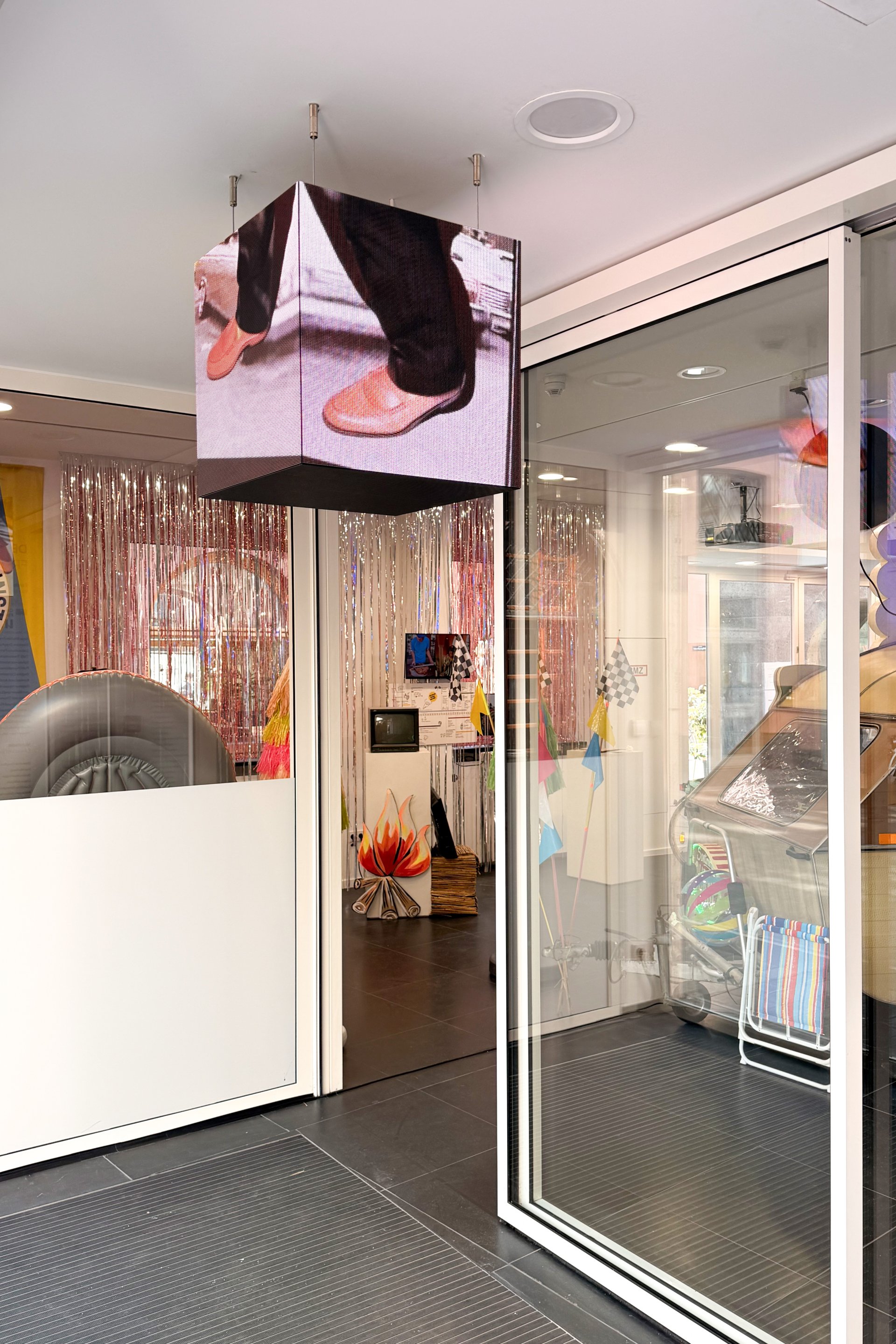
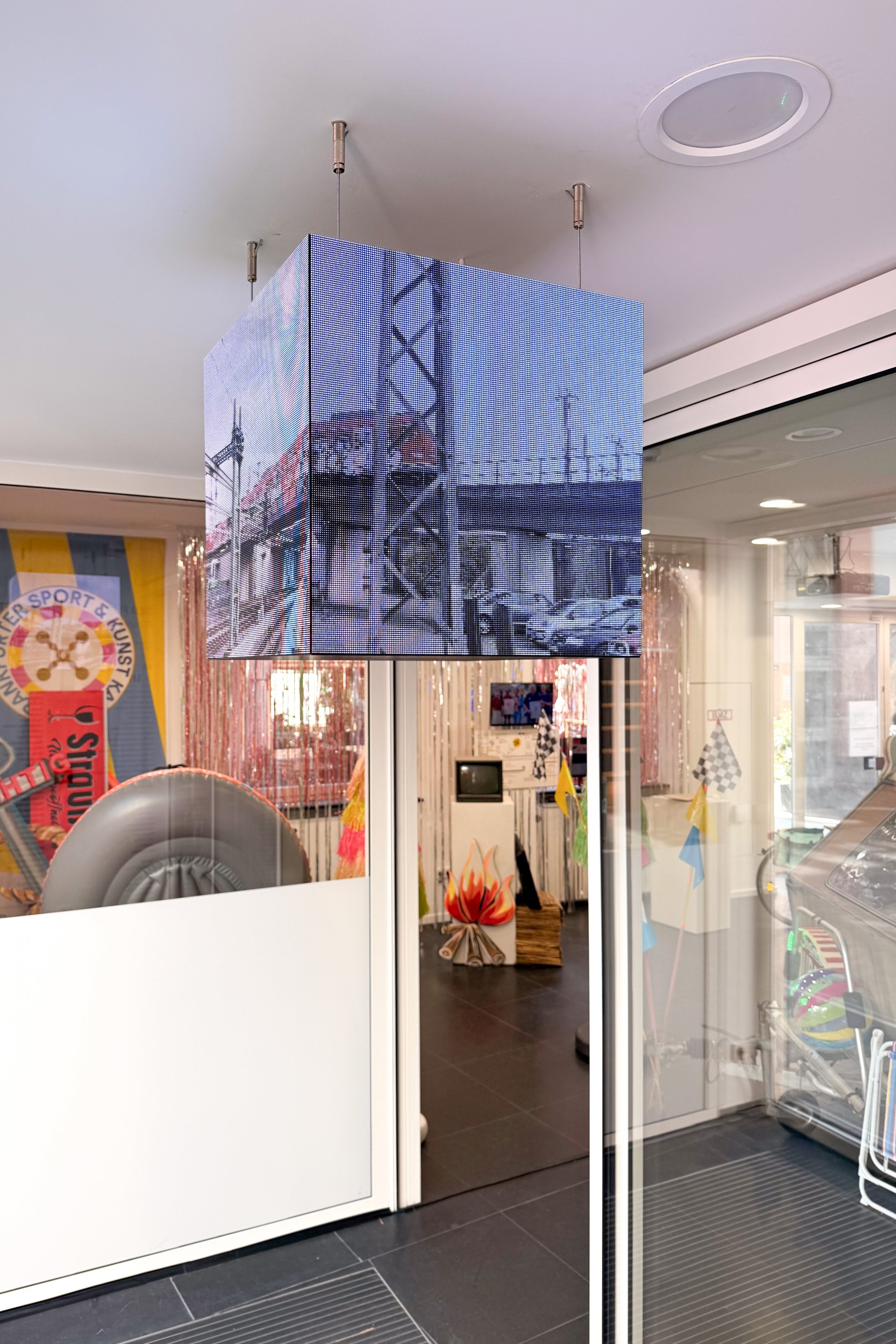
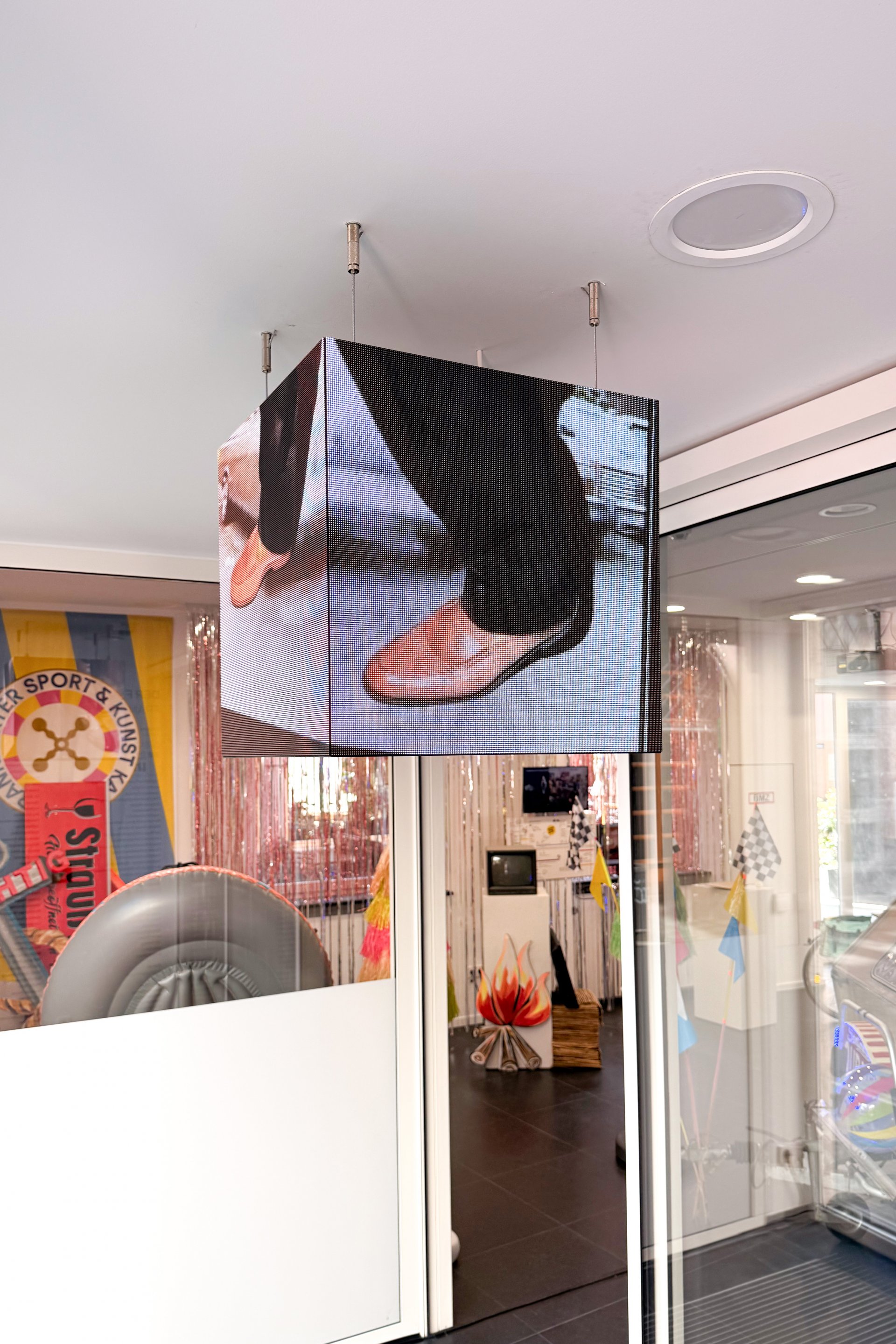
Even from a distance, Leonard Kahlcke’s work Kontakt zur Straße (Contact with the Street) catches the eye of passers-by. In the entrance vestibule of the Frankfurter Kunstverein, he has installed his former shop sign from Neue Mainzer Straße 22. On the advertising cube, Kahlcke presents both his own works and those of selected artists, including Dan Kwon, represented here with Shoes Life.
With his early street-based artistic works, Leonard Kahlcke had a lasting impact on the scene. At a time shaped by debates around urban development and the appropriation of public space, he realised clandestine, subversive interventions in the city together with other actors. Today, Kahlcke employs a different kind of subversive and incisive language, through which he comments on and caricatures the economic power structures of the city and its art institutions.
Hannibal Tarkan Daldaban
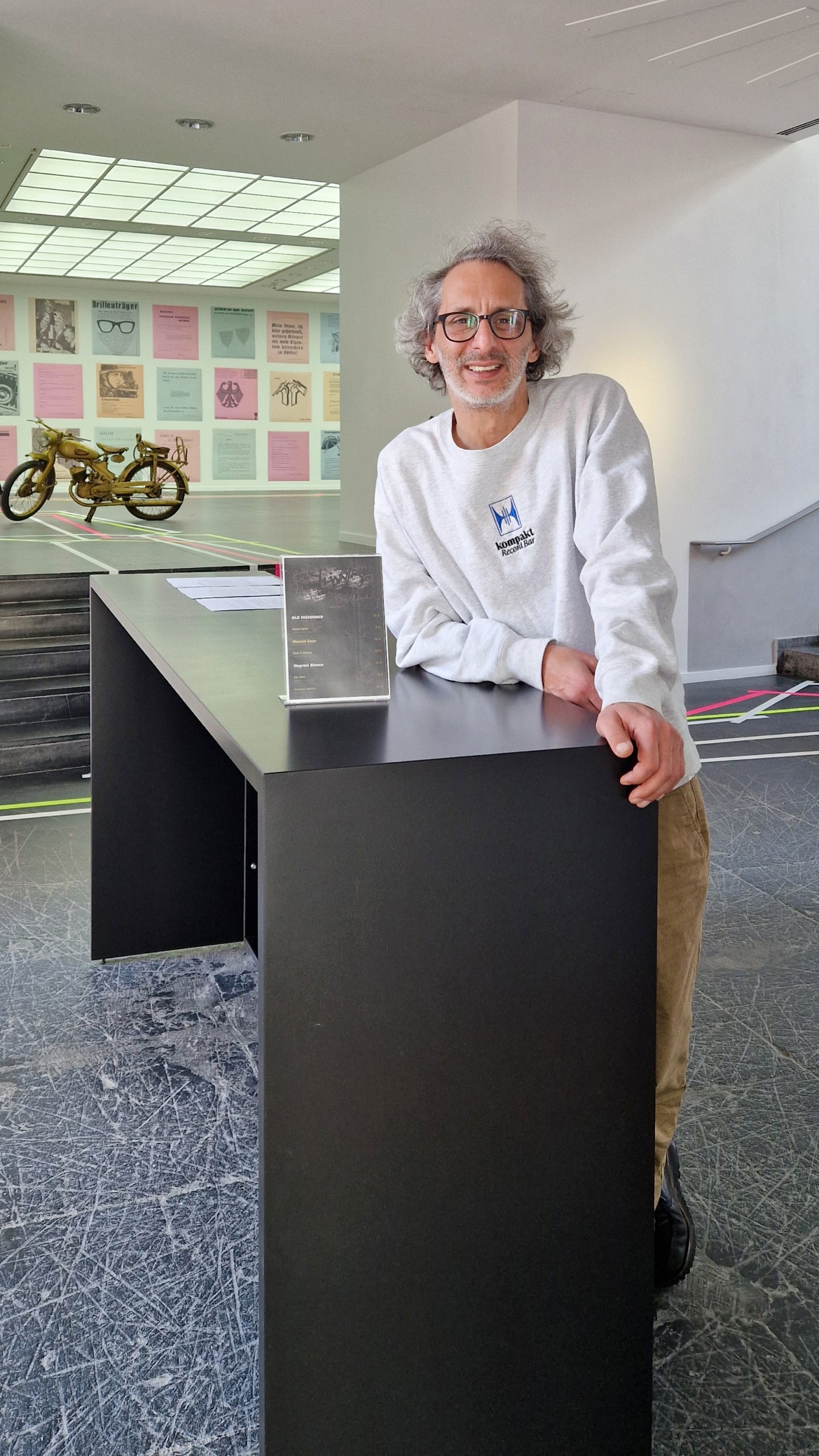
Over the course of the exhibition, Hannibal Tarkan Daldaban activates the foyer on the first floor. Together with designer Luzi Gehrisch, he has developed a bar counter for Hidden History that, on two weekends, becomes a lively gathering place through a DJ set by Luzi Gehrisch and a reading by Dr. Atmo.
Daldaban himself activates the exhibition space through his presence, inviting visitors to listen to stories about events, personalities, and places of Frankfurt’s subculture in the 1990s and 2000s. Visitors can select stories from a menu. These narratives are based on Daldaban’s personal memories and are passed on orally as urban rumor throughout the exhibition. When the artist is not present, the stories can be experienced in video form.
The installation is complemented by a continuous stream of video material offering insight into Daldaban’s work over several decades.
For decades, Hannibal Tarkan Daldaban has been an internationally active promoter and DJ, and a key figure in Frankfurt’s club and event culture. Despite his international career, he has remained based in the Rhine-Main region, where many of his projects originated. At the core of his work is the encounter between people. He creates spaces—temporary environments for connection and shared experience. Many of these past events were never documented and exist only in the memories of those who were there, turning the exhibition into a place of exchange and shared memory.
Heiner Blum
The light-filled exhibition space on the first floor, with its panoramic windows overlooking Frankfurt’s old town, is dedicated to Heiner Blum. The Frankfurter Kunstverein invited Blum to co-develop Hidden History. Blum is the initiator of the Diamant / Museum of Urban Culture. Time and again, he identifies and activates vacant sites, dedicating them to the production and presentation of socio-cultural events.
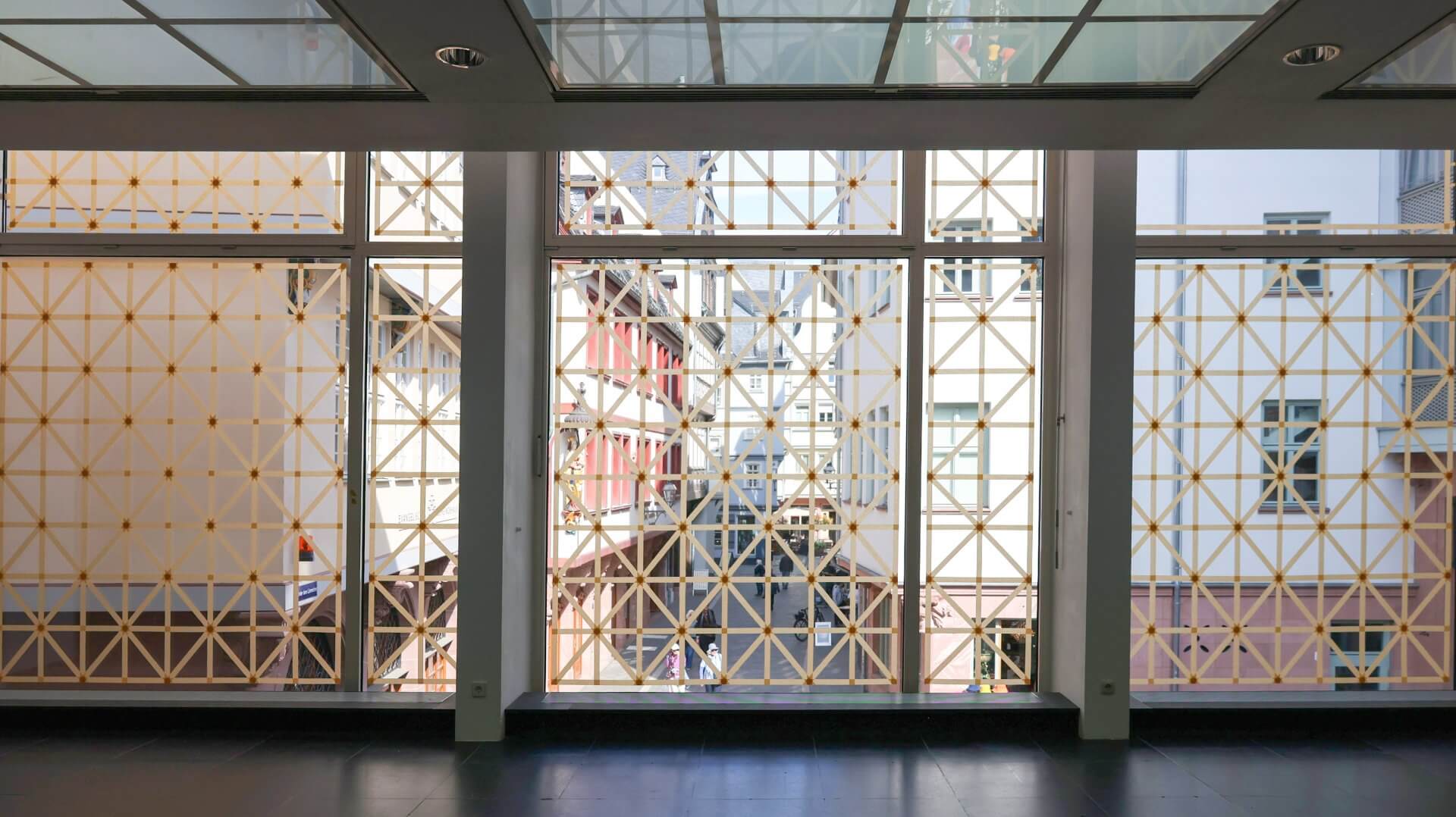
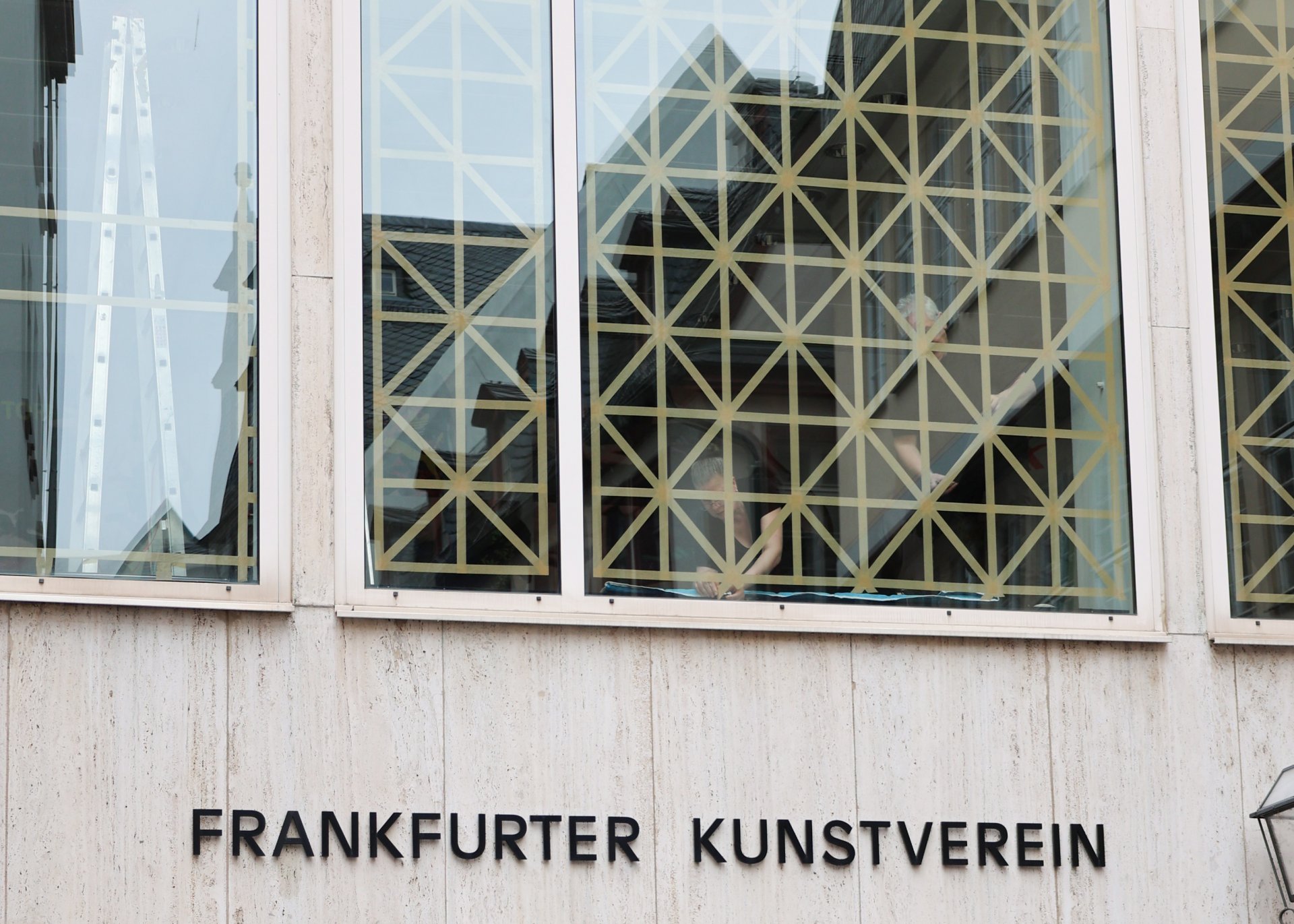
Along the window façade, Blum presents the large-scale tape installation Flying Glass. Using packing tape, he creates a geometric composition across the glass surfaces, visible from the surrounding city. This work references a historical practice from the World Wars, when windows were taped to prevent shattering from bomb explosions. Beyond its protective function, this technique produced an aesthetic that expressed a desire for structure and beauty in times of crisis. Blum’s work establishes a bridge between past and present through a simple yet fundamental gesture.
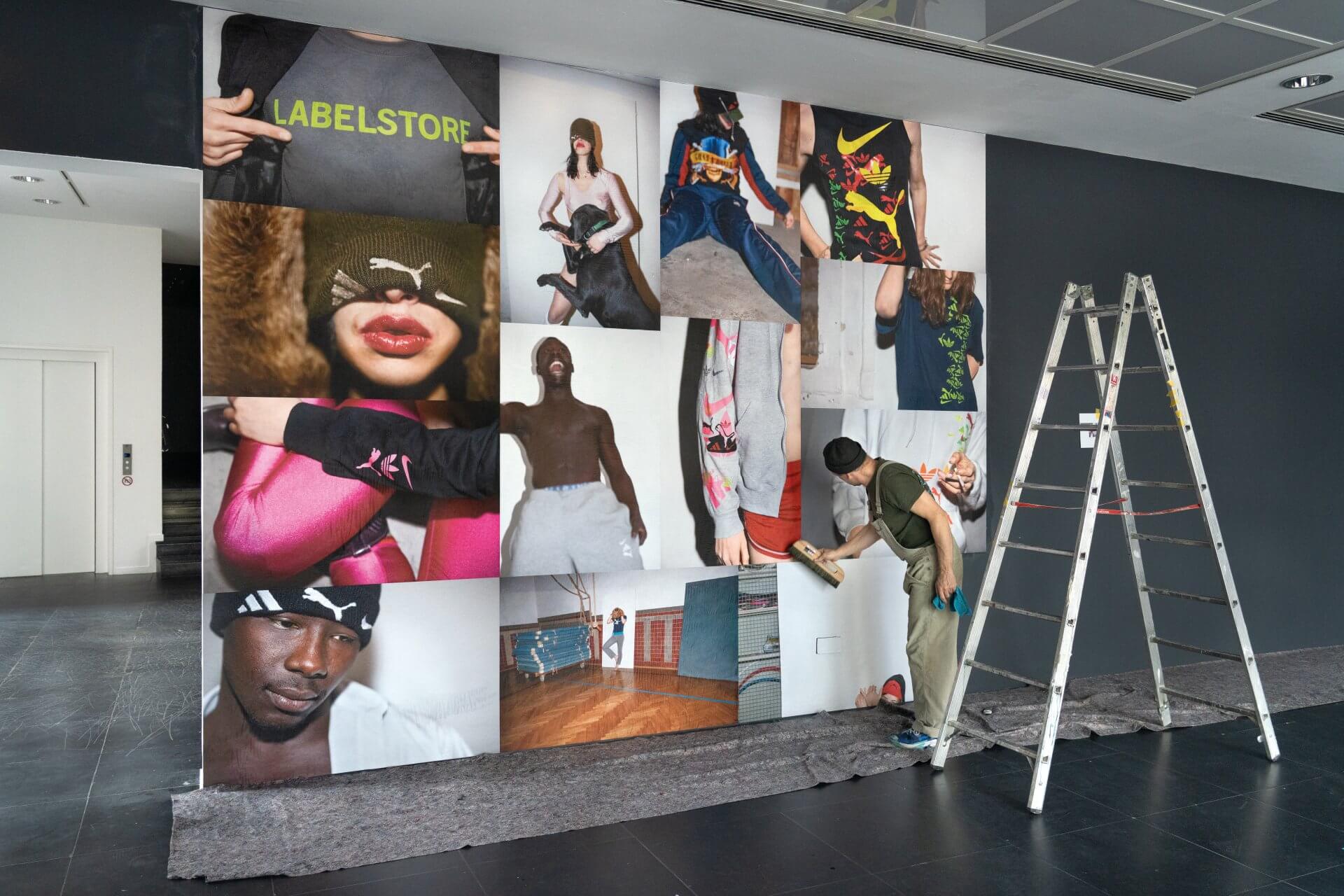
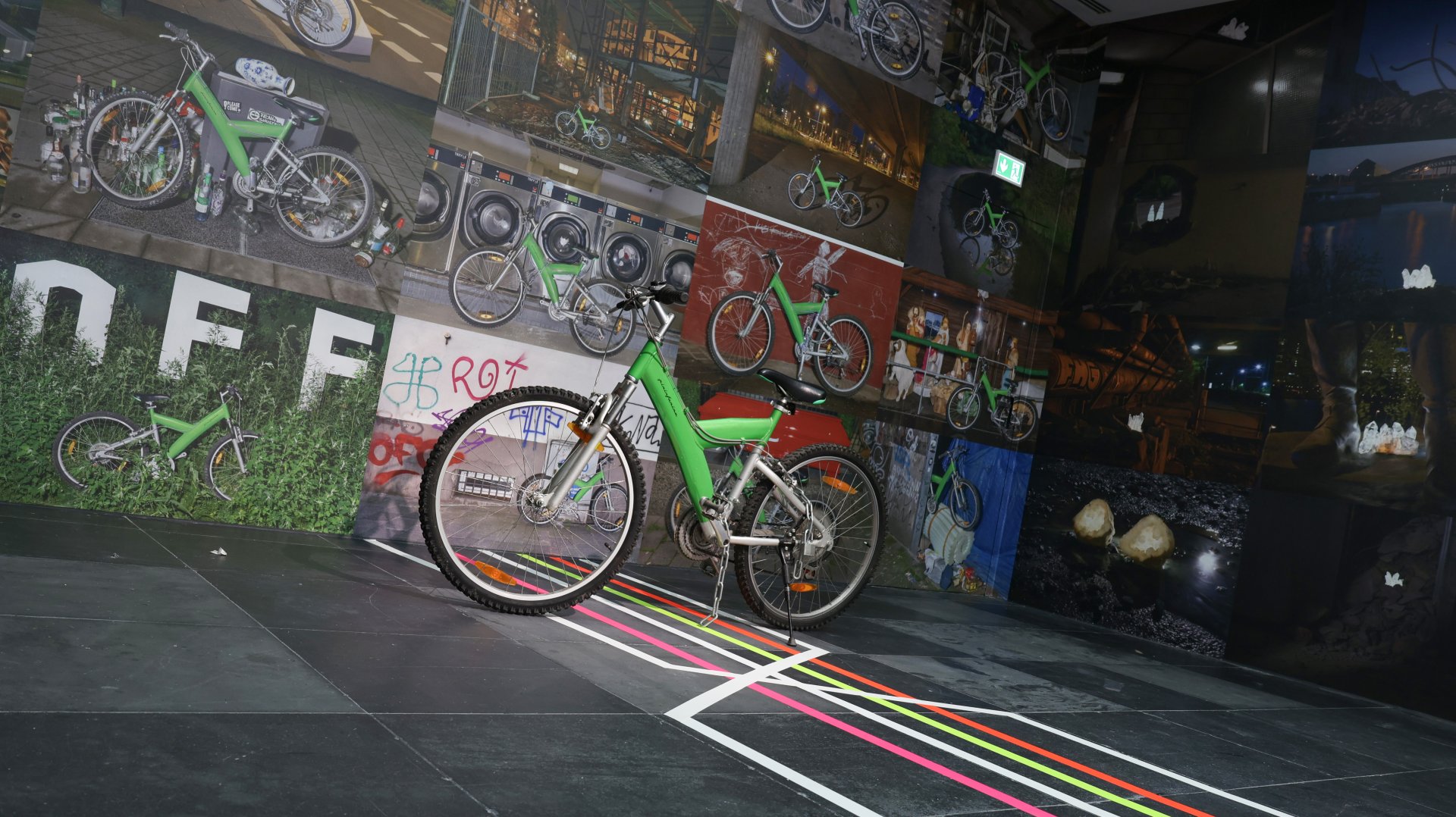
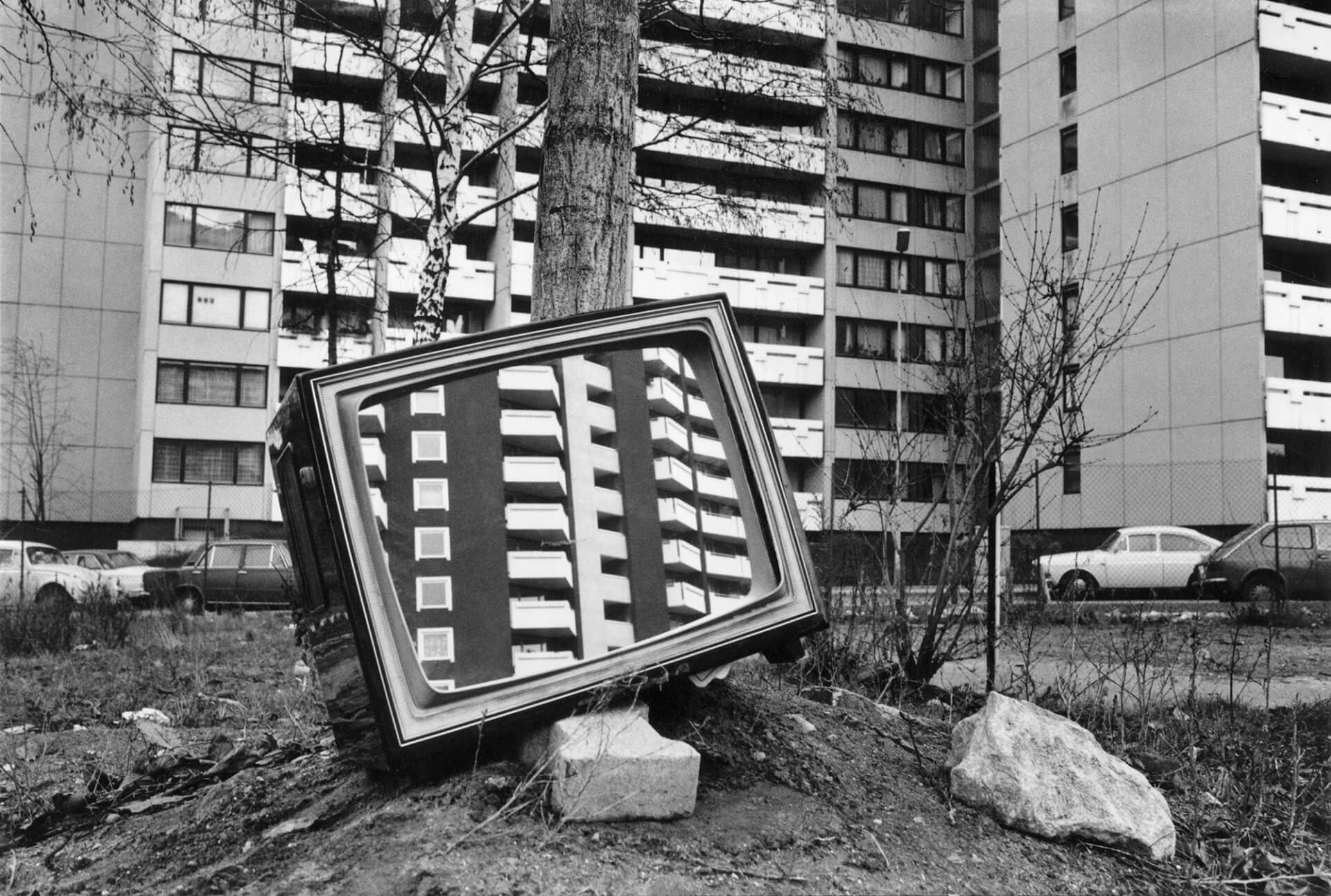
Inside the exhibition space, Blum presents a photographic documentation of his largely unknown, street-related works from 1974 to the present, forming an expansive wall collage. Included are images from the project Labelstore (1997), realized together with Leonard Kahlcke. Under this fictional brand, they explored consumption, branding, and authenticity through the language and aesthetics of fashion. The campaign was photographed by Nadine Fraczkowski, with Anne Imhof appearing alongside other models as a face of the brand.
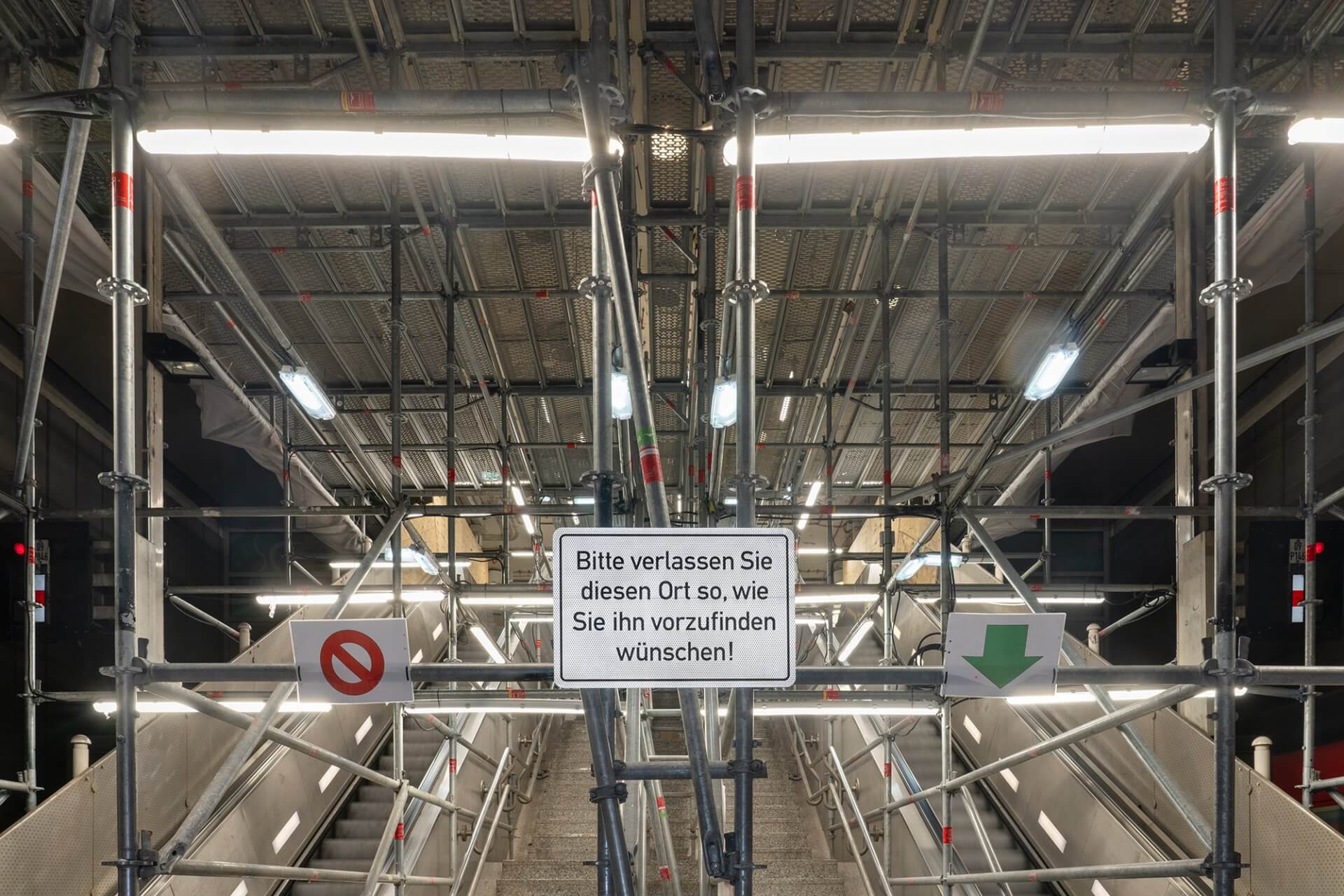
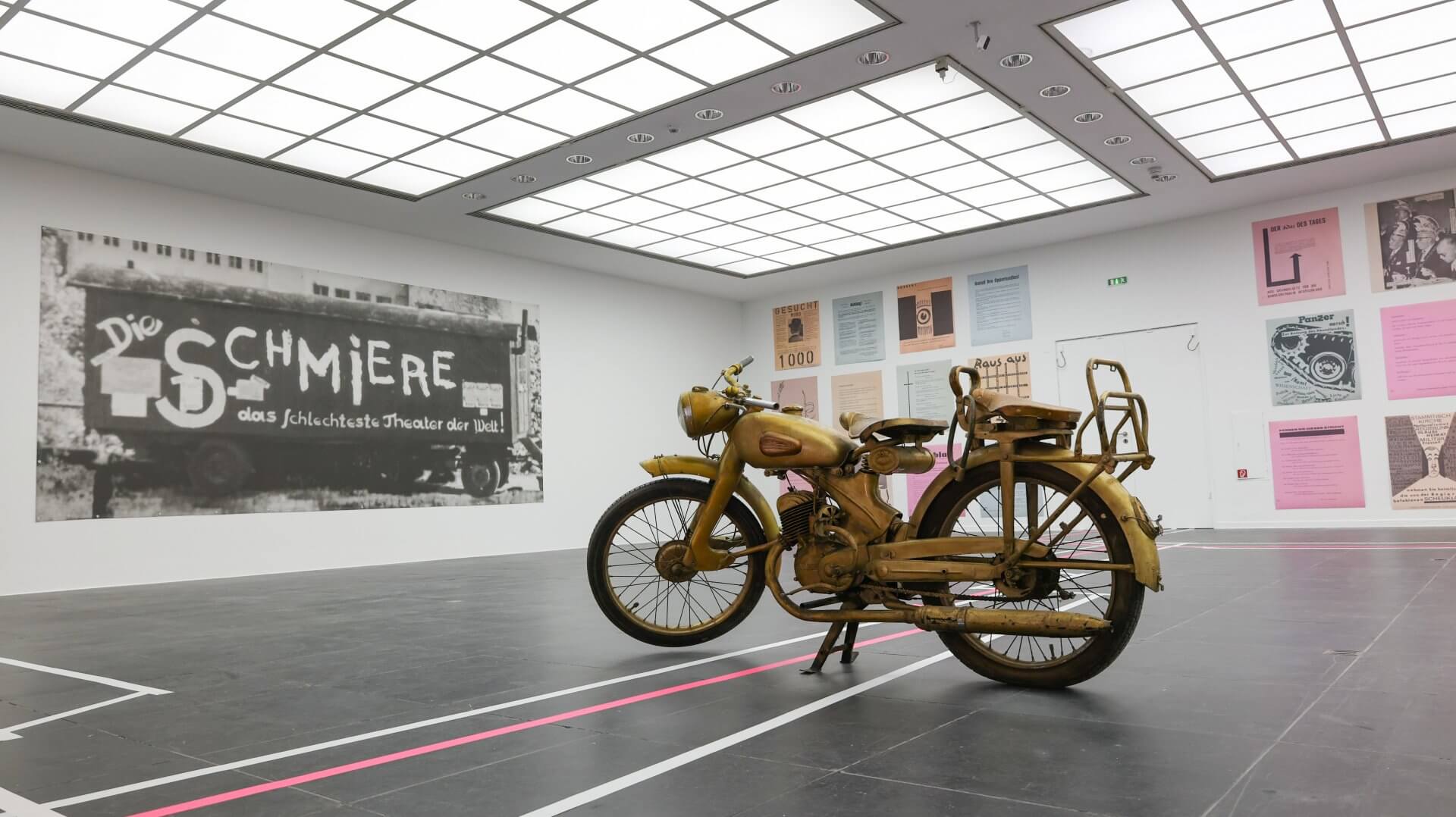
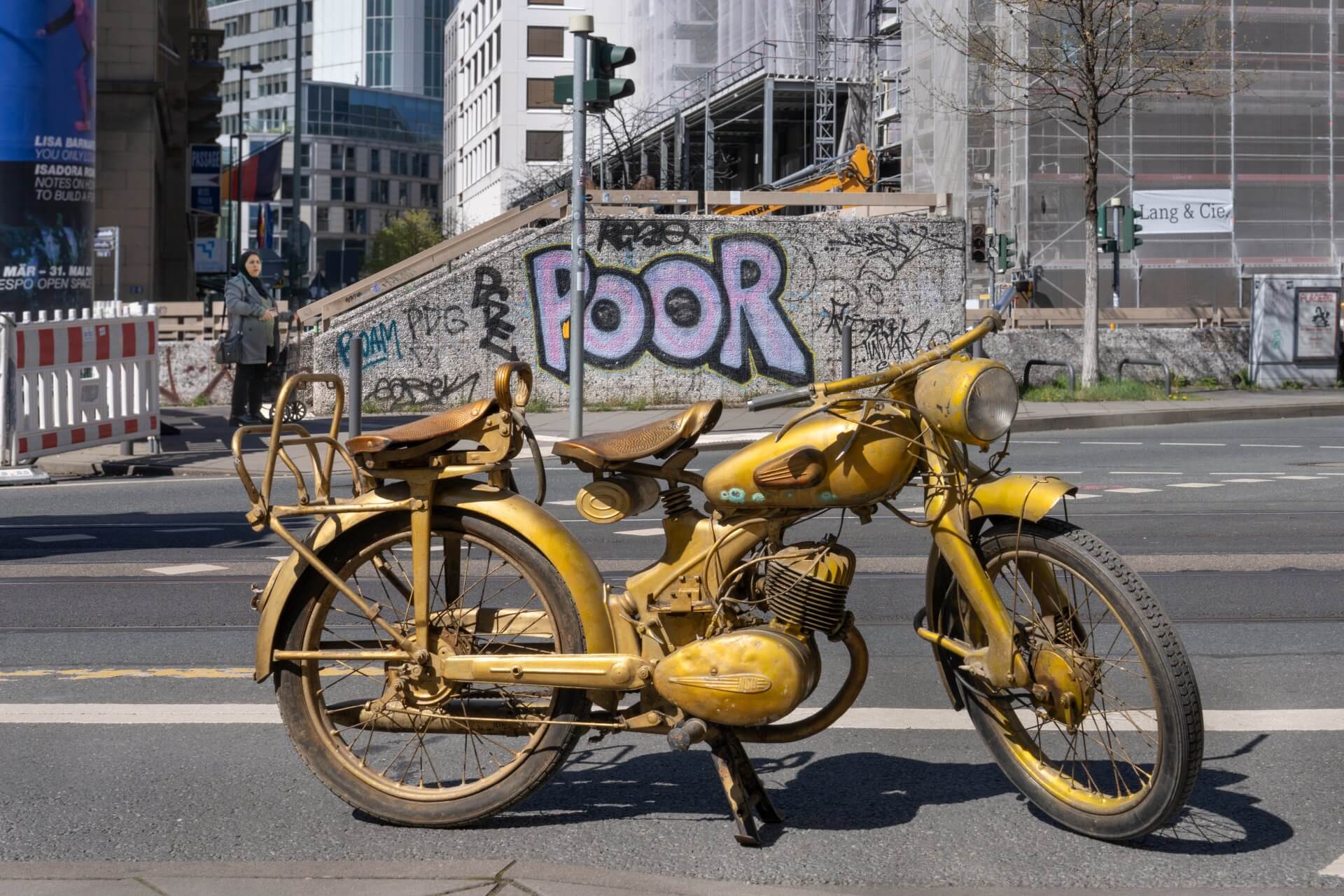
A current series by Blum consists of signs that call for shared responsibility in public space. He has repeatedly placed objects within the urban environment, including the green Pininfarina bicycle, which has become a carrier of collective memory.
Blum’s work consistently investigates public space and forms of cultural expression beyond institutional structures. His practice revolves around the question of who owns urban space and how it can be appropriated through creative intervention.
Die Schmiere
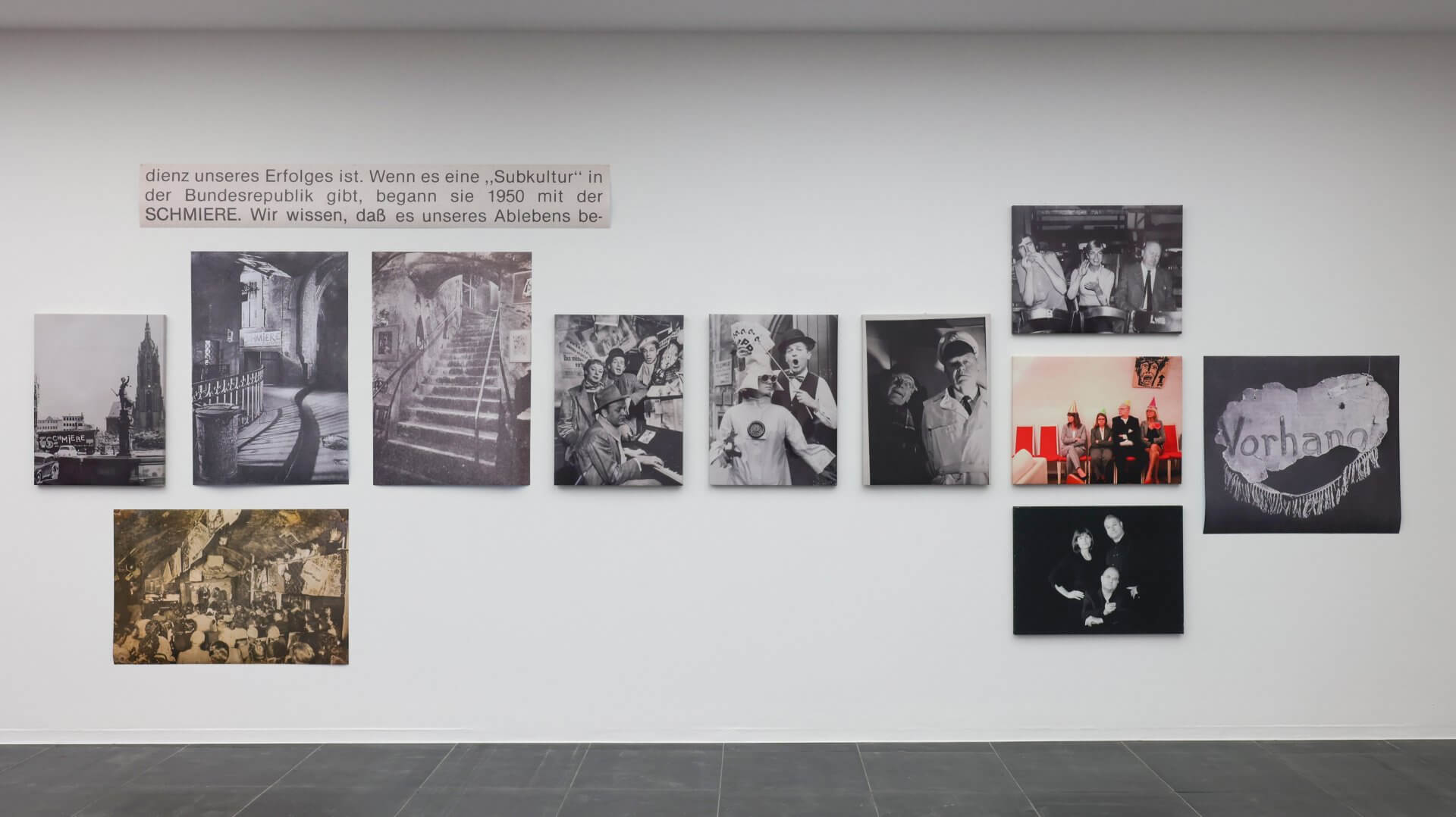
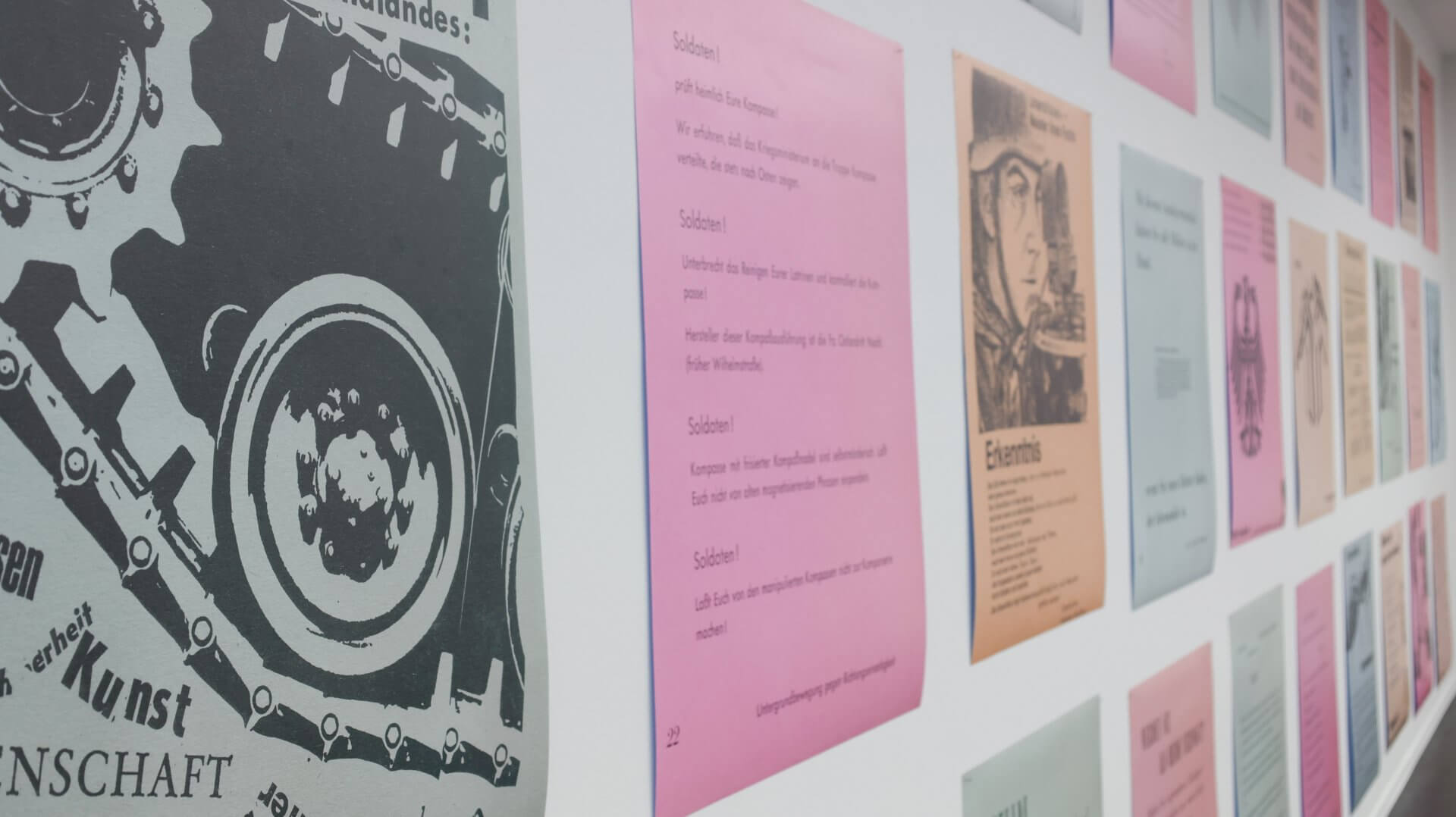
On the second floor, the exhibition traces a historical arc back to the immediate post-war period of the Steinernes Haus. This gallery is dedicated to the cabaret and satirical theatre Die Schmiere.
Founded in 1950 by Rudolf Rolfs, Die Schmiere was initially conceived as a travelling stage, with a wooden caravan intended to tour across the country—an idea that was never realised. During the years of economic recovery and reconstruction, the satirical theatre and literary cabaret instead settled in the Steinernes Haus (now home to the Frankfurter Kunstverein), adopting the motto: “Die Schmiere – the worst theatre in the world”.
The group moved into the cellar vaults of the heavily damaged building, where traces of their presence remain visible today in the form of wall paintings. Seated on simple chairs and lit by a single 100-watt light bulb, performances took place on an improvised stage. The theatre was independent and highly political, holding up a mirror to post-war society with striking irreverence and addressing topics such as nuclear policy and the peace movement through satire. Rolfs deliberately operated without institutional funding in order to avoid censorship. In doing so, he established a practice that can be understood as an early form of subcultural production in Germany. As noted in the theatre’s chronicle published in 1985: “If there is such a thing as ‘subculture’ in the Federal Republic, it began in 1950 with Die Schmiere.”
Since 1990, Die Schmiere has been continued by Rolfs’s daughter Effi B. Rolfs and Matthias Stich, and is now based in the vaulted cellar of the Carmelite Monastery. The theatre’s leaflets, pamphlets and publications still feel strikingly relevant today, while at the same time expressing the enduring social necessity of intellectually alert, courageous and non-conformist art. Supporting accessible, innovative and bold artistic practices within the Steinernes Haus remains a central concern of the Frankfurter Kunstverein to this day.
During the Night of Museums on 25 April 2026, this space will become a stage for young female hip-hop artists from the Rhine-Main region.
Schwarzi
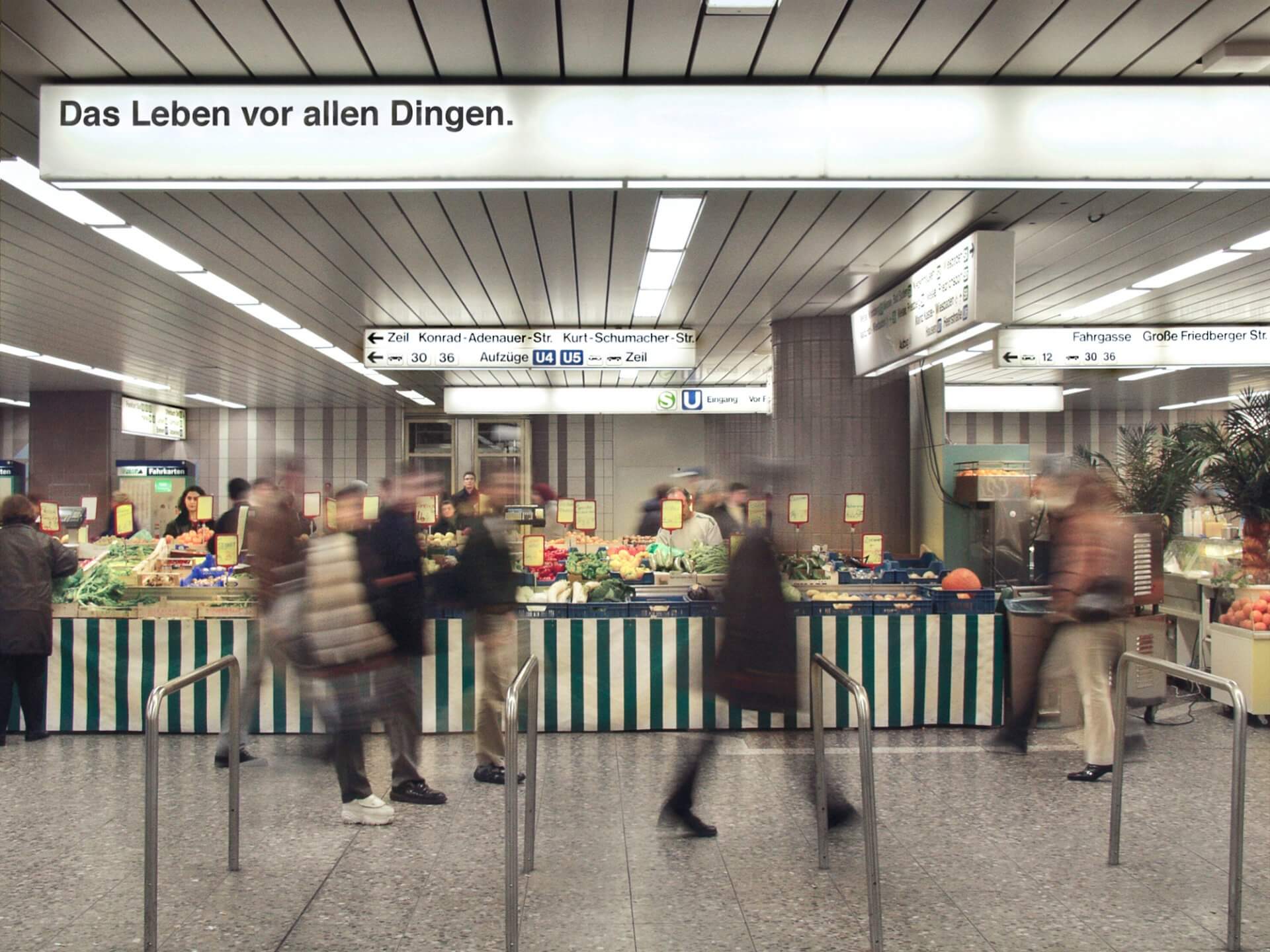
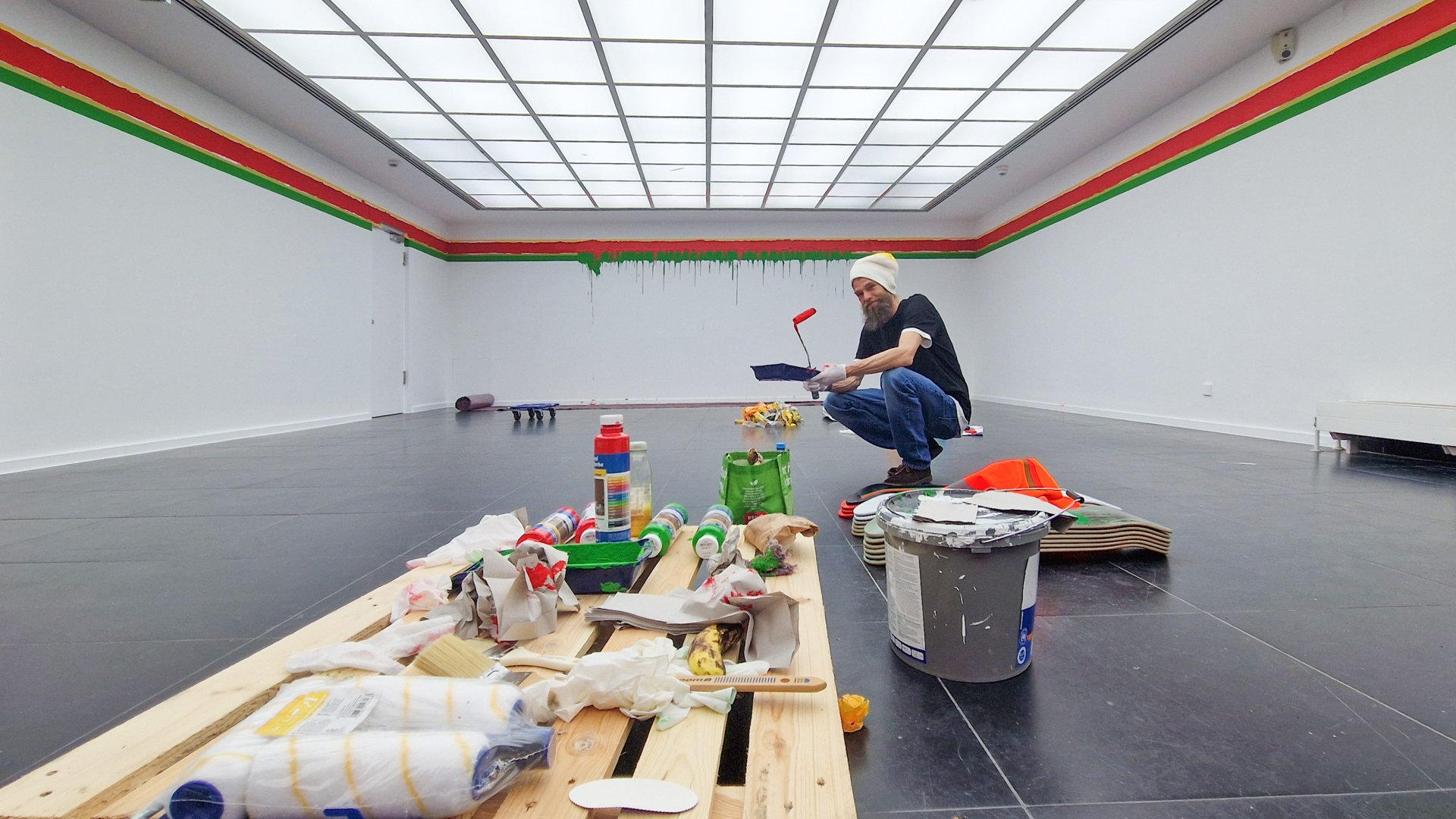
The third floor is dedicated to Schwarzi, a key figure in Frankfurt’s skateboarding subculture. Since the early 1990s, he has been among those who claimed the brutalist concrete space of the Hauptwache and transformed it into a central meeting point for the German skate scene.
For the Frankfurter Kunstverein, Schwarzi translates the codes and aesthetics of skate culture into the exhibition space. He incorporates formal and chromatic elements drawn from the urban environment of the Hauptwache. The colors green and red, taken from the station’s orientation system, function as collective memory markers within the city.
These visual codes also inform the T-shirt and skateboard designs of his label Hauptwache 2.0. Together with a custom obstacle, Schwarzi presents boards and apparel in the exhibition, attempting to transfer urban subculture into an institutional context.
Oguz Sen and Honji Wang
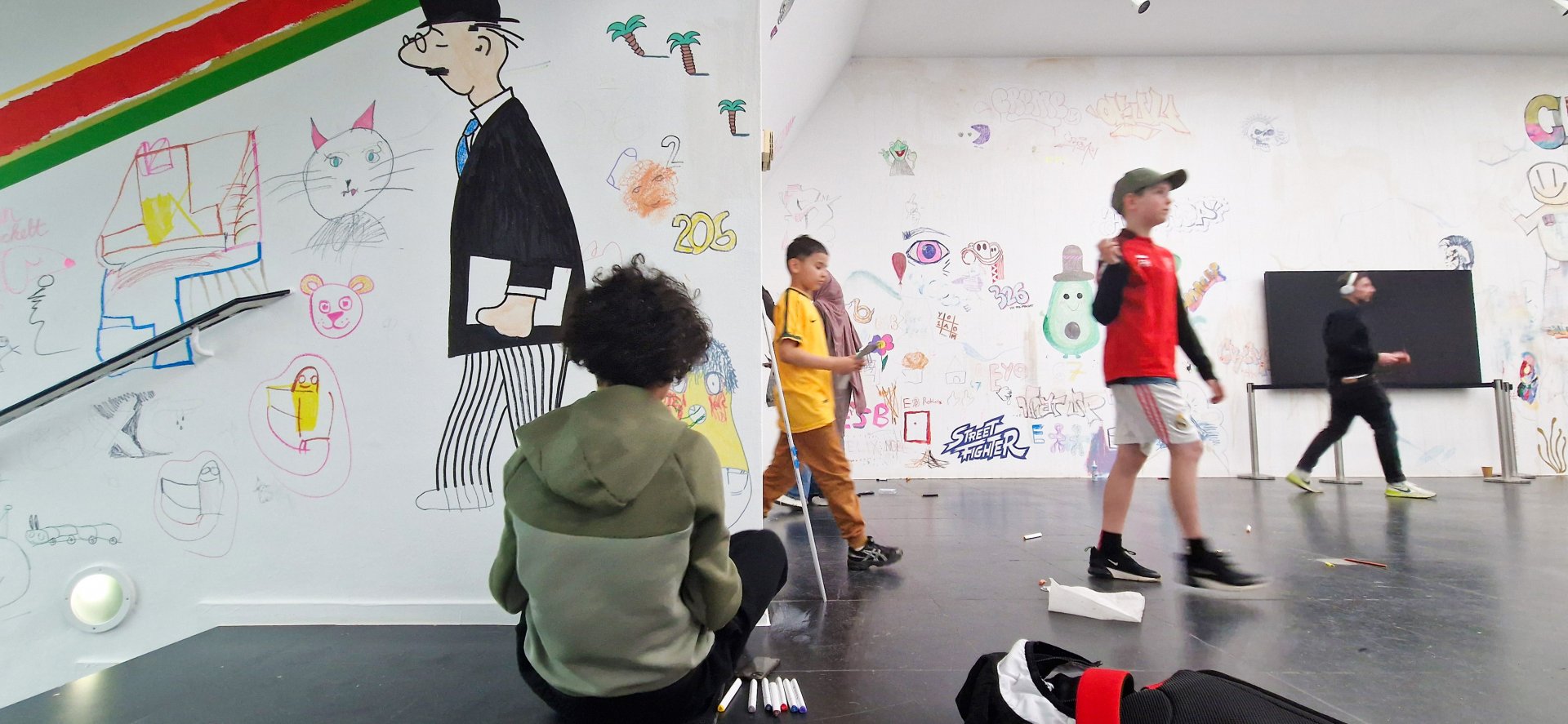
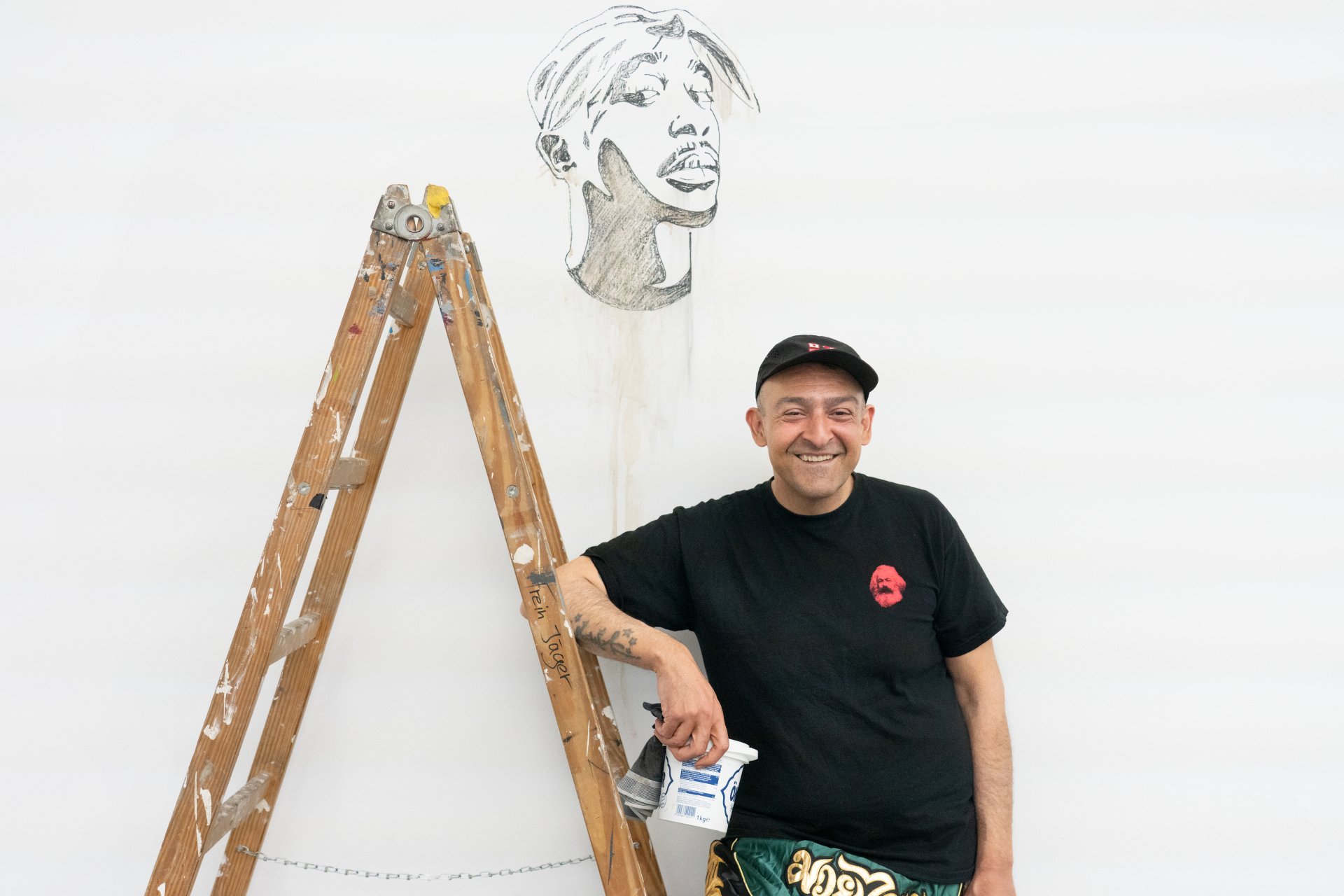
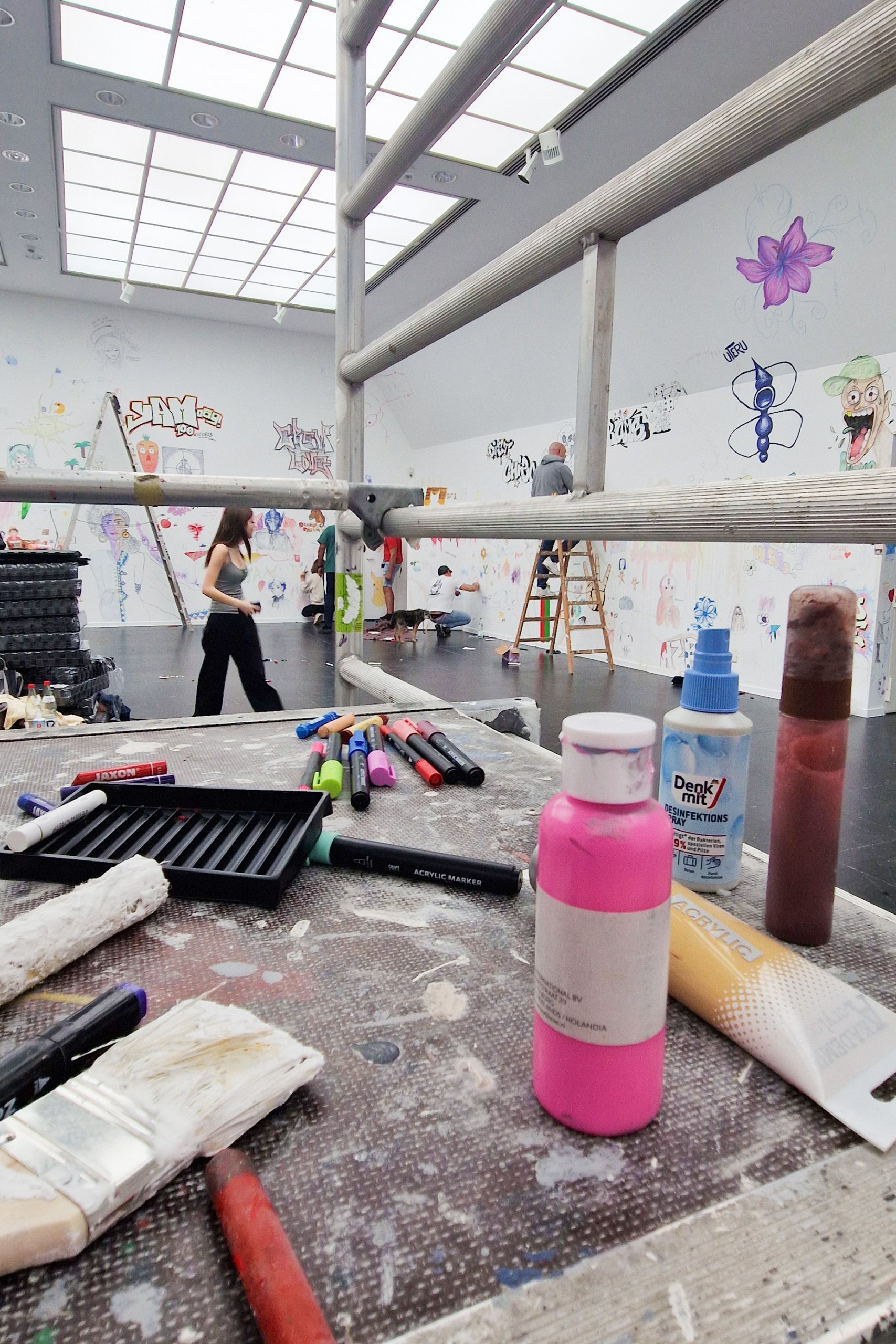
The final room of the exhibition parcours is dedicated to the artist and activist Oguz Sen and choreographer and performer Honji Wang. For the Frankfurter Kunstverein, Sen and Wang have jointly developed a participatory work at the intersection of drawing and performance. La La Land – Aufhören anzufangen is conceived as an open system, sustained by collective participation and continuous transformation.
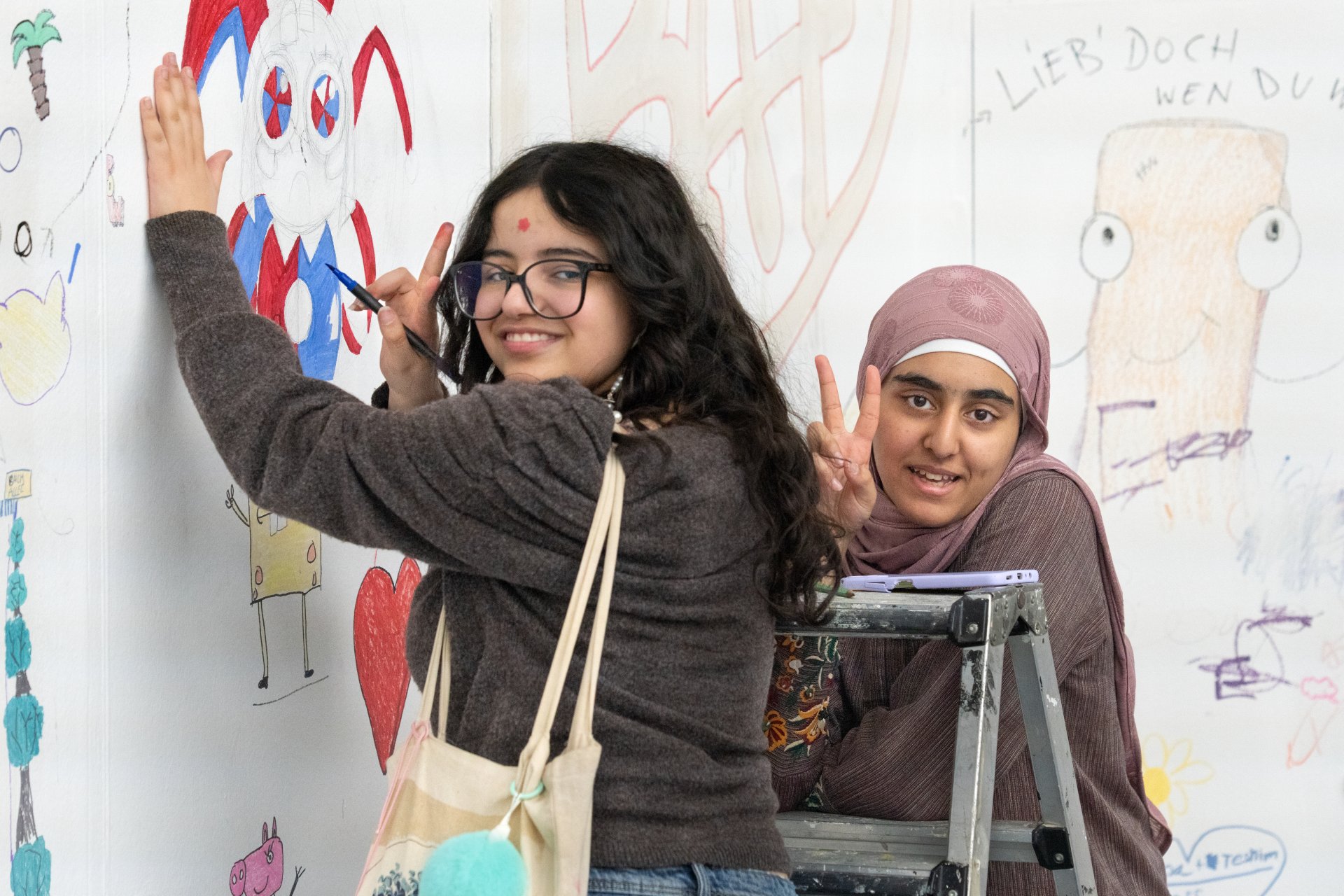
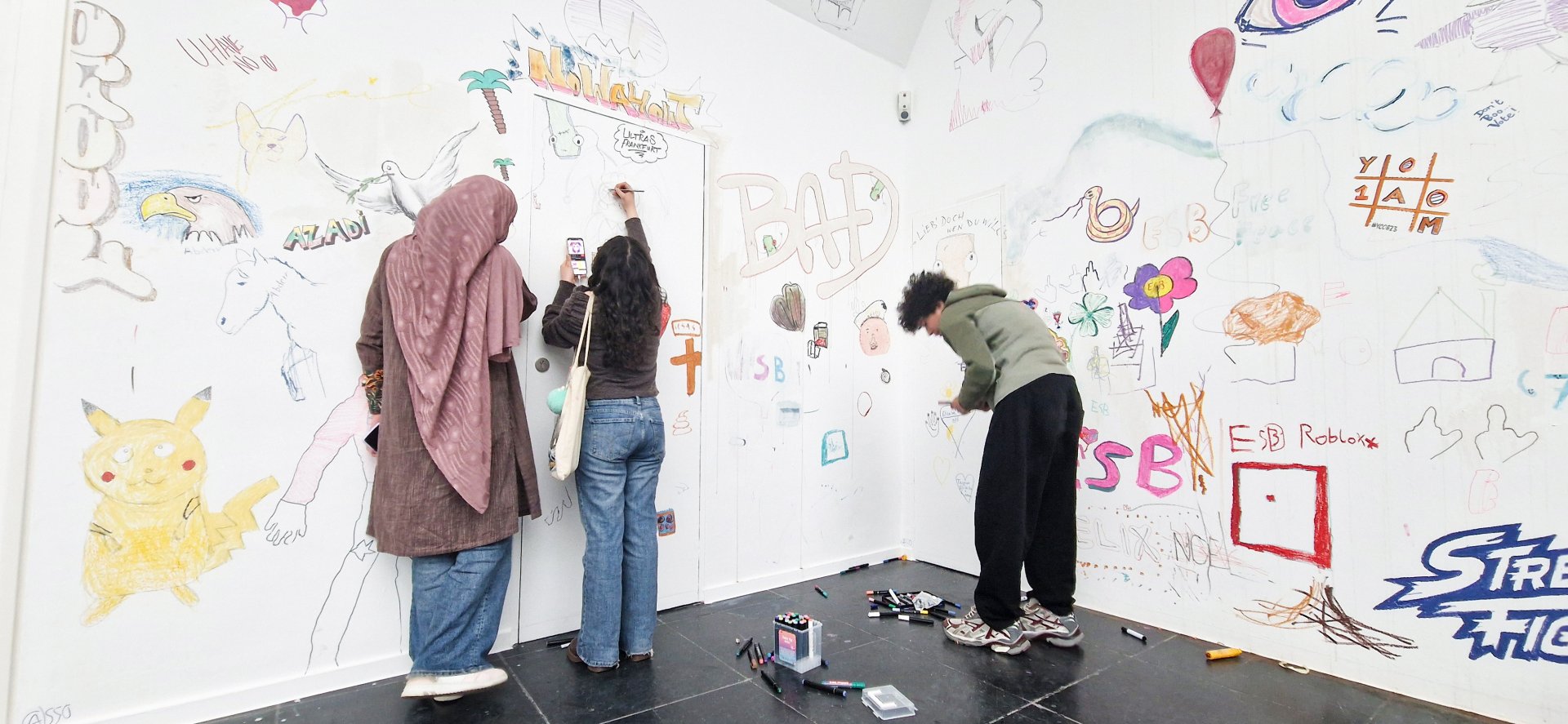
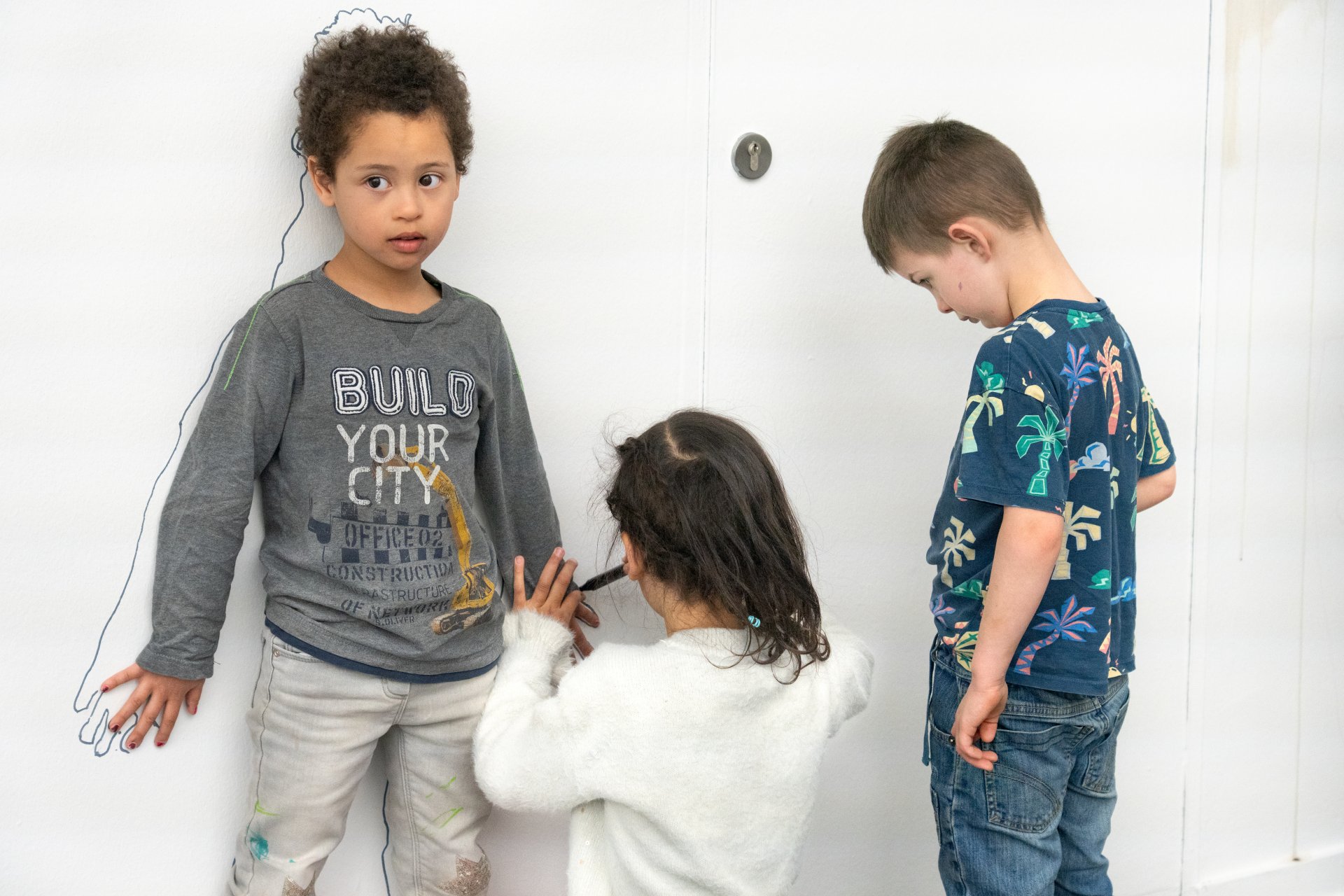
Over several weeks, a large-scale wall drawing takes shape in the space, developed collaboratively by different groups. Participants include people with experiences of addiction, people experiencing homelessness, individuals with migration backgrounds, as well as children and young people in care. Each contributes their own experiences, perspectives and forms of expression.
The process follows a simple principle: each group continues what others have begun. Drawings are added to, overlaid or extended—forming a collective image that has no fixed end.
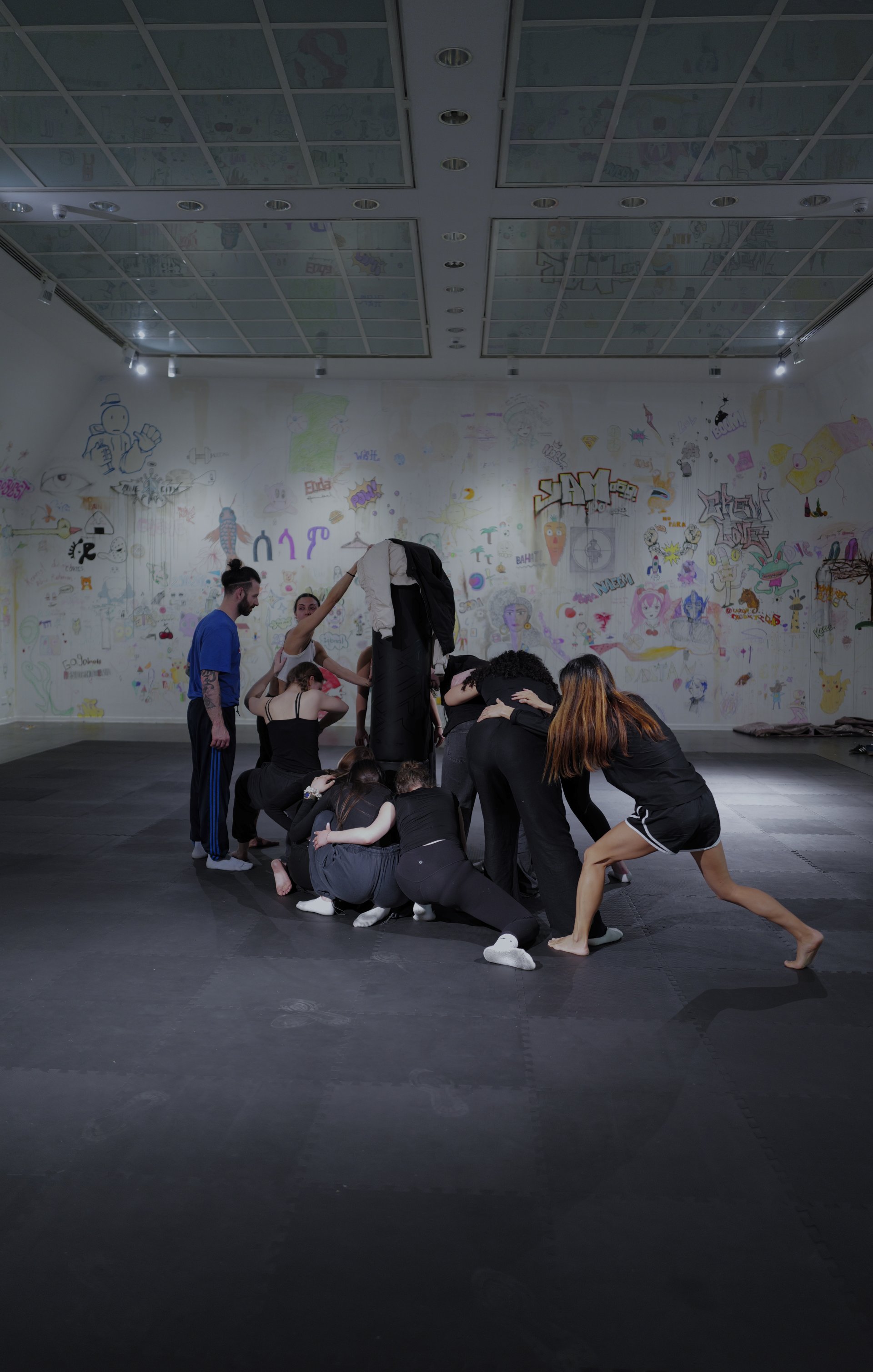
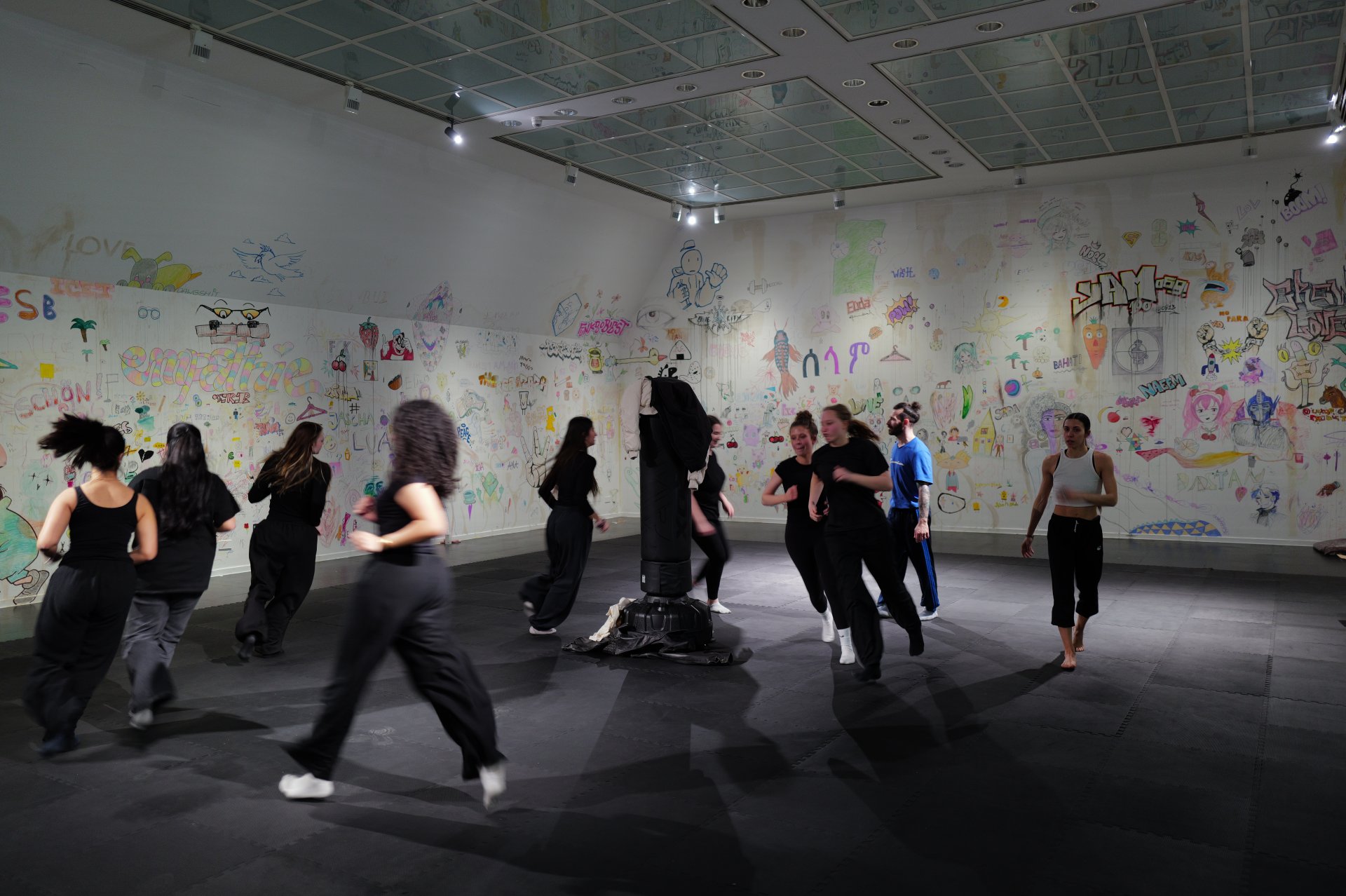
In parallel, Sen and Wang develop a performance that activates the space together with students from the Rudolf Koch School in Offenbach and dancers Caterina Politi and Marco Di Nardo. Without a fixed choreography, movement emerges from presence, encounter and situation. Performers and participants share the space on equal terms—between action and stillness, decision and openness.
The work creates a temporary, democratic space in which artistic production becomes tangible as a collective process. The concept is transferable: it can adapt to different places, groups and contexts while remaining consistent in its core—starting, stopping, continuing.
The room installation is complemented by a wall piece by Mathias Weinfurter. A series of transparent fence panels forms a grid in front of the existing drawing. Slight shifts and interruptions within the panels guide the eye across the wall and structure the visual space. Individual segments are partially blocked or framed. These mechanisms of protection and demarcation alter the conditions for continuing the drawing by restricting access and deliberately guiding possible interpretations.
Oguz Sen is an activist working in public space, engaging in social and political discourse. Through his large-scale murals, he addresses political issues and social injustices. His well-known works include a mural at Frankfurt’s Osthafen dedicated to Alan Kurdi, who drowned in the Mediterranean in 2015 while fleeing Syria, as well as a 27-metre-long painting beneath the Friedensbrücke commemorating the victims of the racist attack in Hanau, realised together with the “Kollektiv ohne Namen”.
He shares a long-standing friendship with internationally acclaimed and award-winning dancer Honji Wang. Wang is a choreographer and performer shaped by hip-hop underground culture. Raised in Frankfurt as the daughter of Korean immigrants, she is a self-taught artist who developed her practice outside institutional frameworks. Her work emerges from lived experience, where movement becomes a form of knowledge—rooted in breakdance, martial arts, and the physical realities of discipline, labor, and resilience. Across her choreographic and performative work, Wang is interested in the body as a site of memory, contradiction, and transformation.
The performance can be experienced free of charge during the exhibition opening on 17 April at 7 pm and 9 pm, without registration. Tickets for a second performance on Saturday, 18 April at 7 pm are available via Eventbrite. A video documentation allows the performance to be experienced in the space beyond its live presentation.
Rushy Diamond
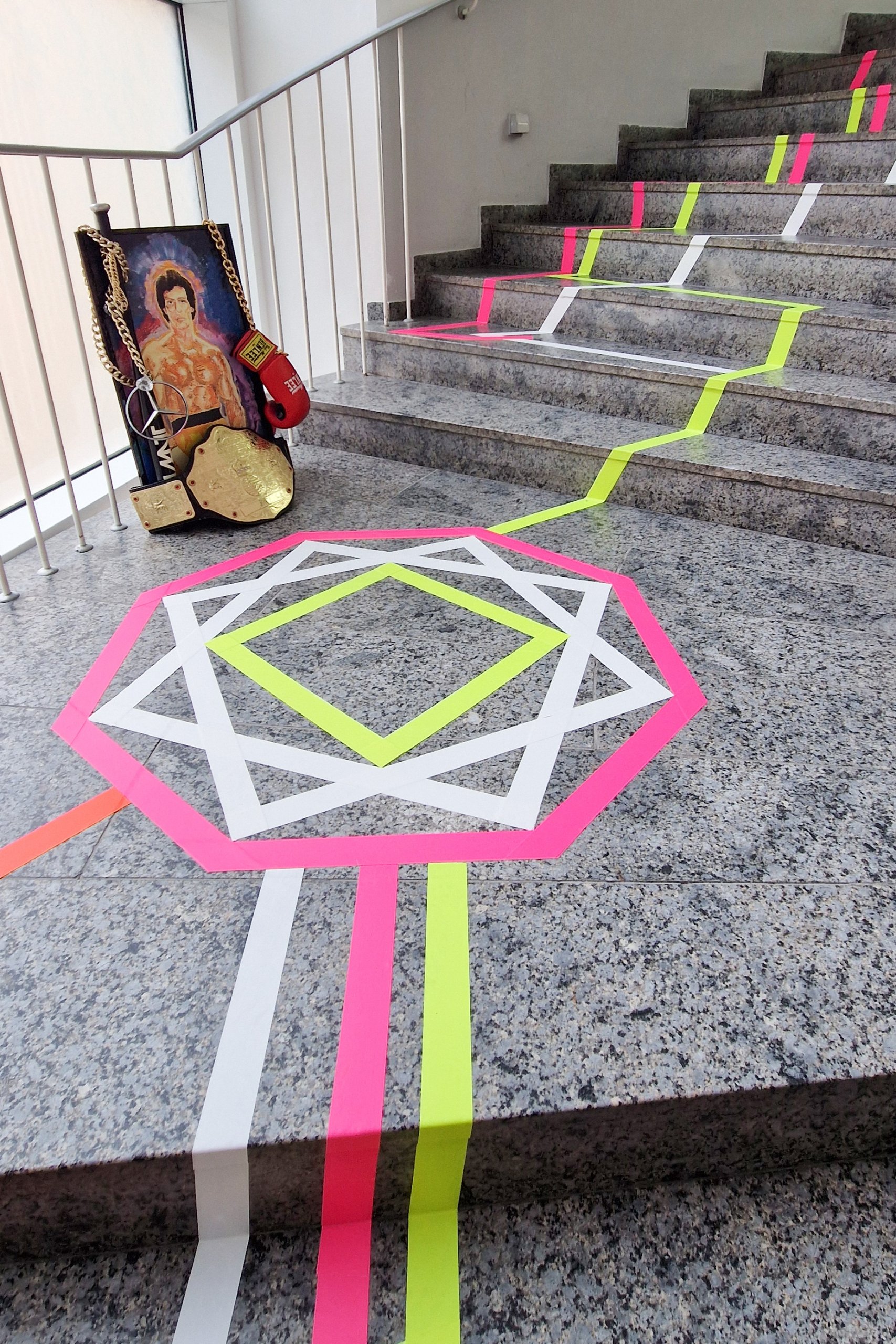
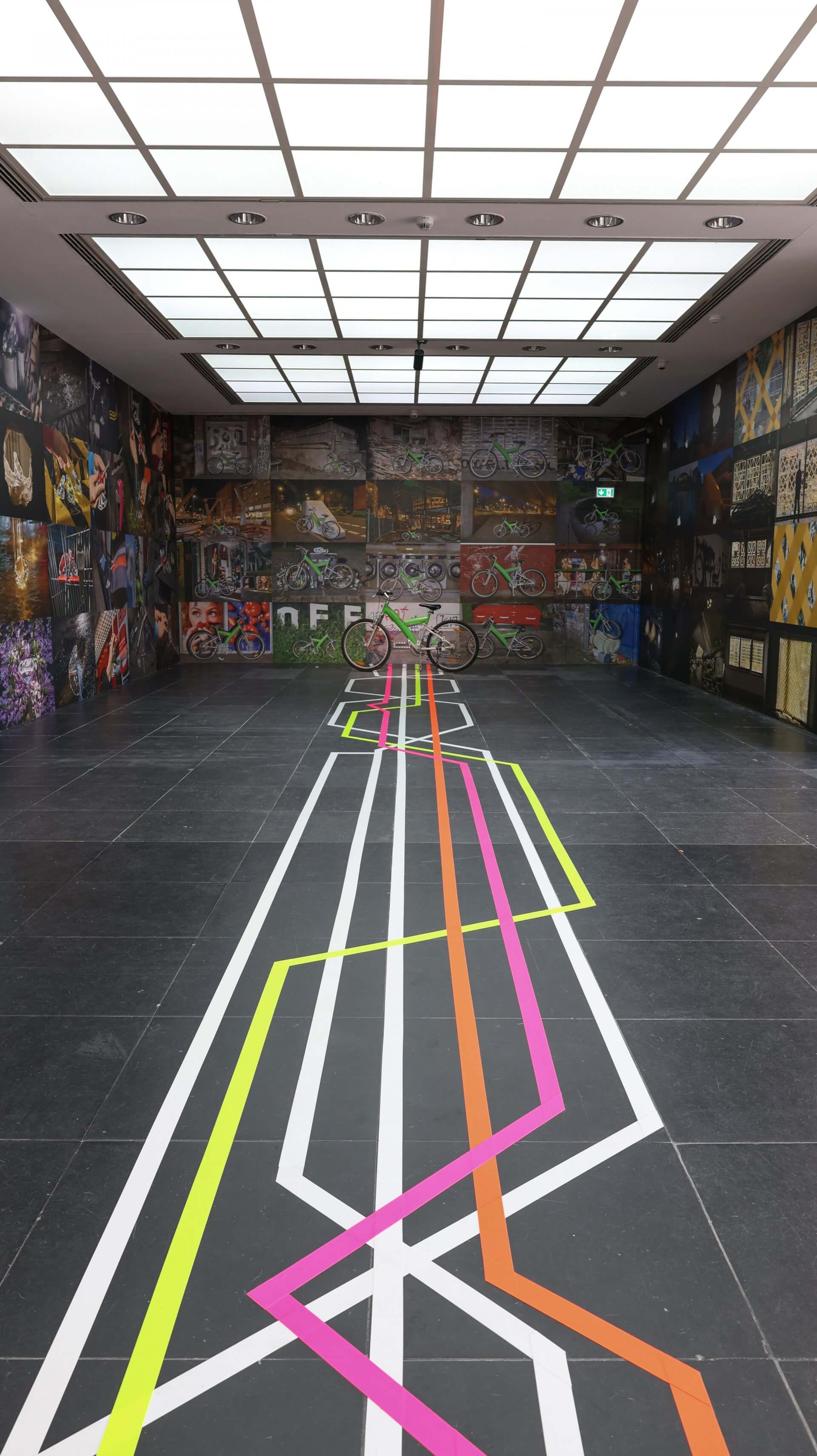
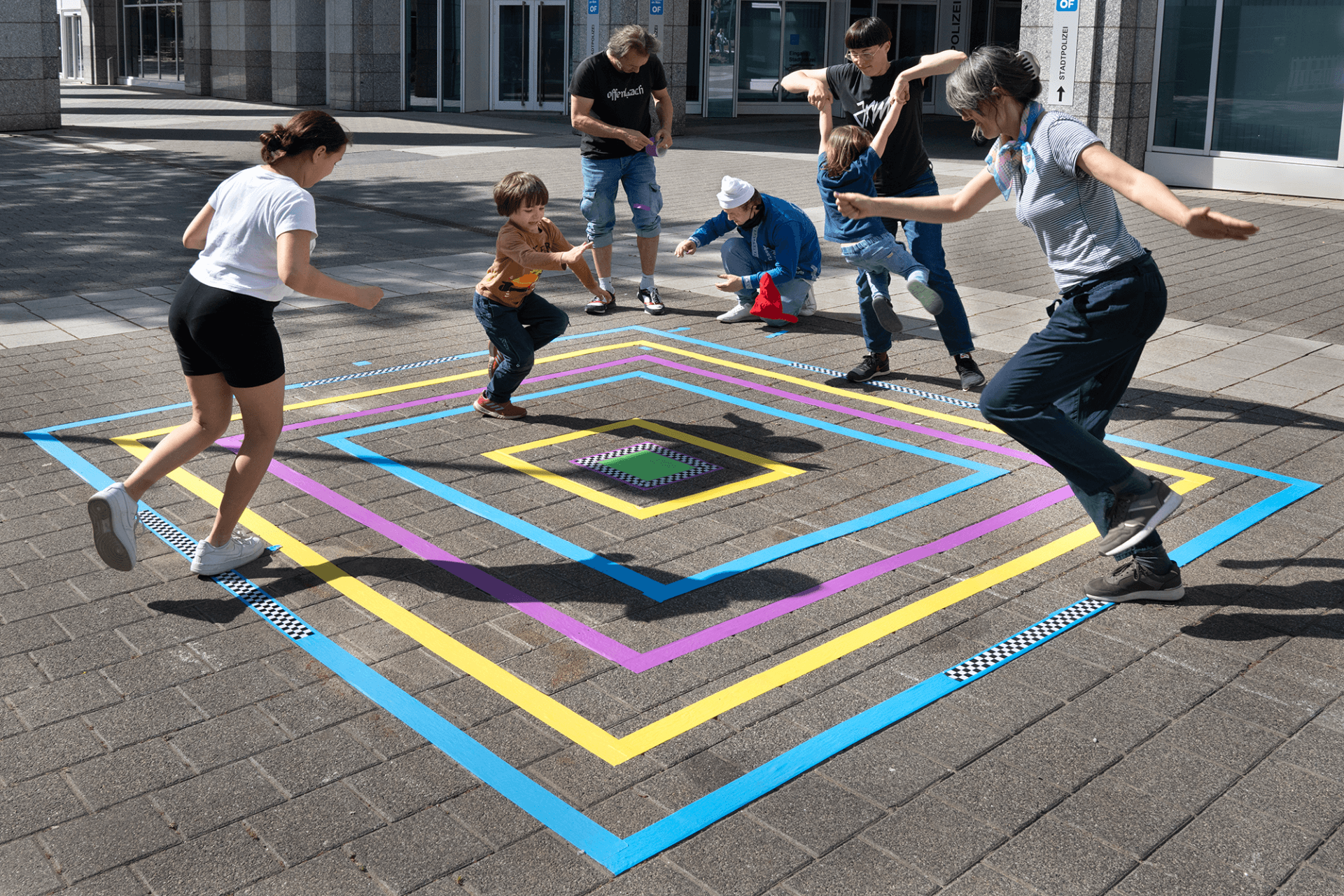
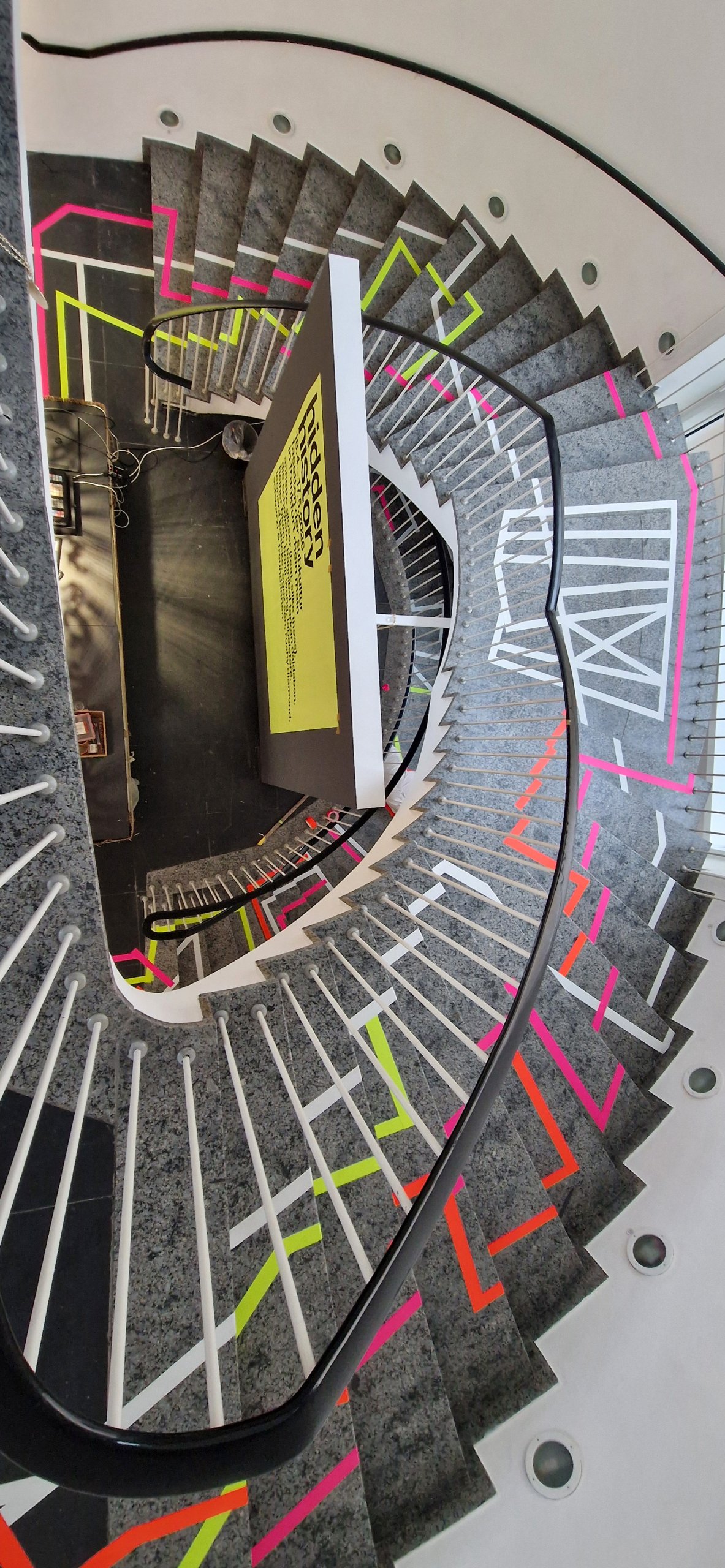
Throughout the entire building, the site-specific tape work (Tape Modern) by artist and activist Rushy Diamond unfolds. His practice emerges from the urban environment, using colored adhesive tape inspired by the functional visual systems of street markings.
For the Frankfurter Kunstverein, he has created a floor installation spanning all levels of the exhibition. Using white and neon-colored tape, he connects the different spaces and works in a structure resembling both a tree and a motherboard. This graphic system links all rooms and participants into a single network.
Raised around the Hauptwache and Zeil, Rushy Diamond became known through his interventions in public space. In 2022, invited by the Deutsches Architekturmuseum, he created a large-scale tape intervention at the Hauptwache, prompting public reflection on the future of the square.
For decades, his practice has functioned as a creative act of resistance. Through interaction with diverse communities, he activates public spaces and reclaims them as shared urban environments.