



Julie Edel Hardenberg (Paneraaq)
Project Ikioqatigiilluta (language project), 2008
6 prints on rigid foam board, 28,5 cm x 28,5 cm each
10 foil prints on acrylic glass, 40 x 40 cm each
Nuan` (great), 2011
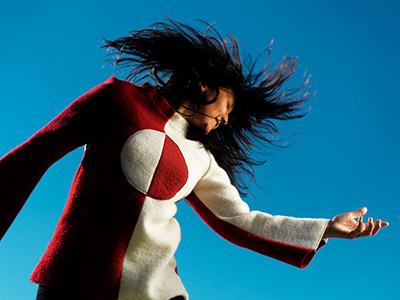
Print on rigid foam board, framed
180 x 180 cm
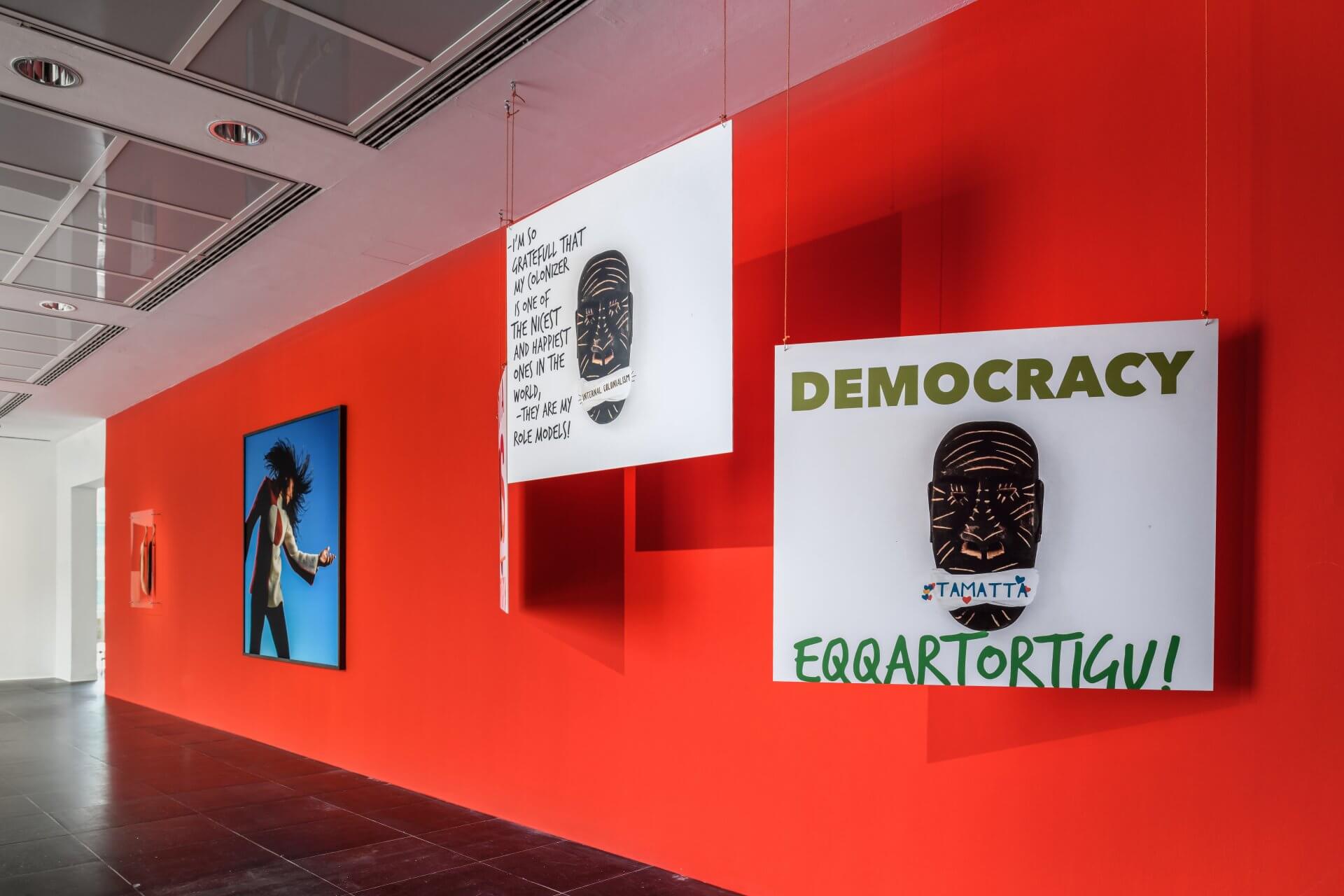
Unmask, #10, 2017
Unmask, #6, 2017
Unmask, #1, 2017
3 prints on rigid foam board
119,7 x 100 cm each
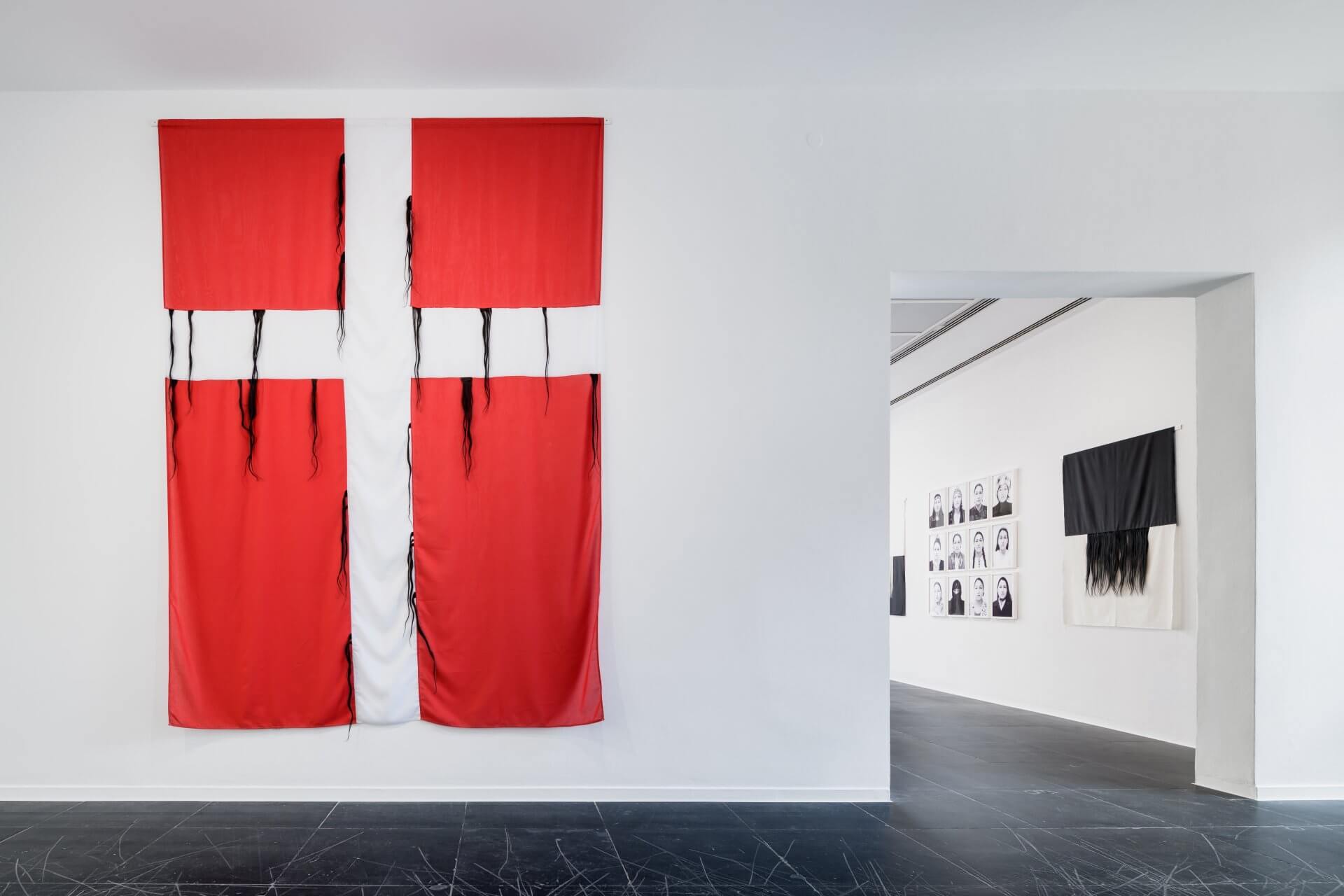
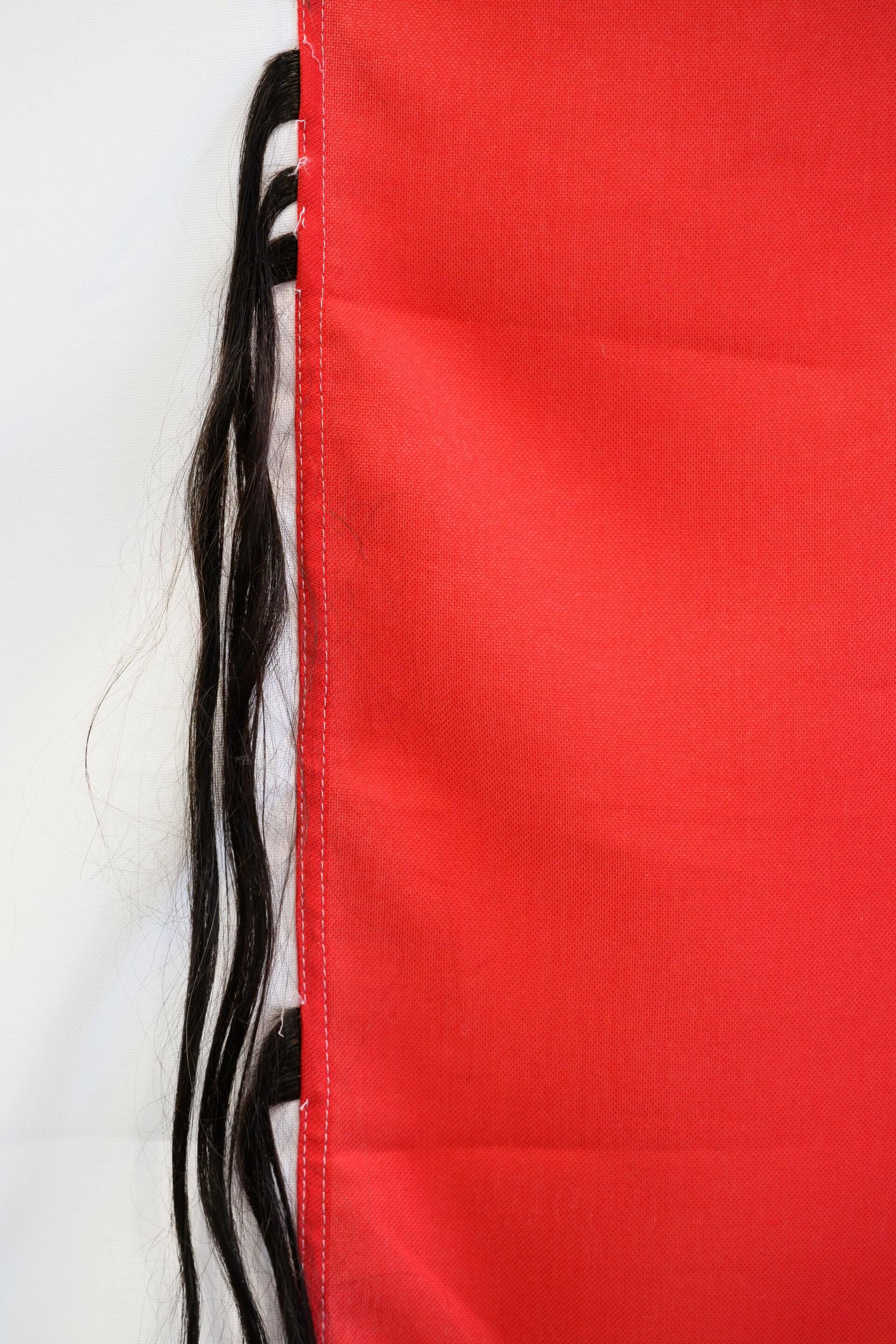
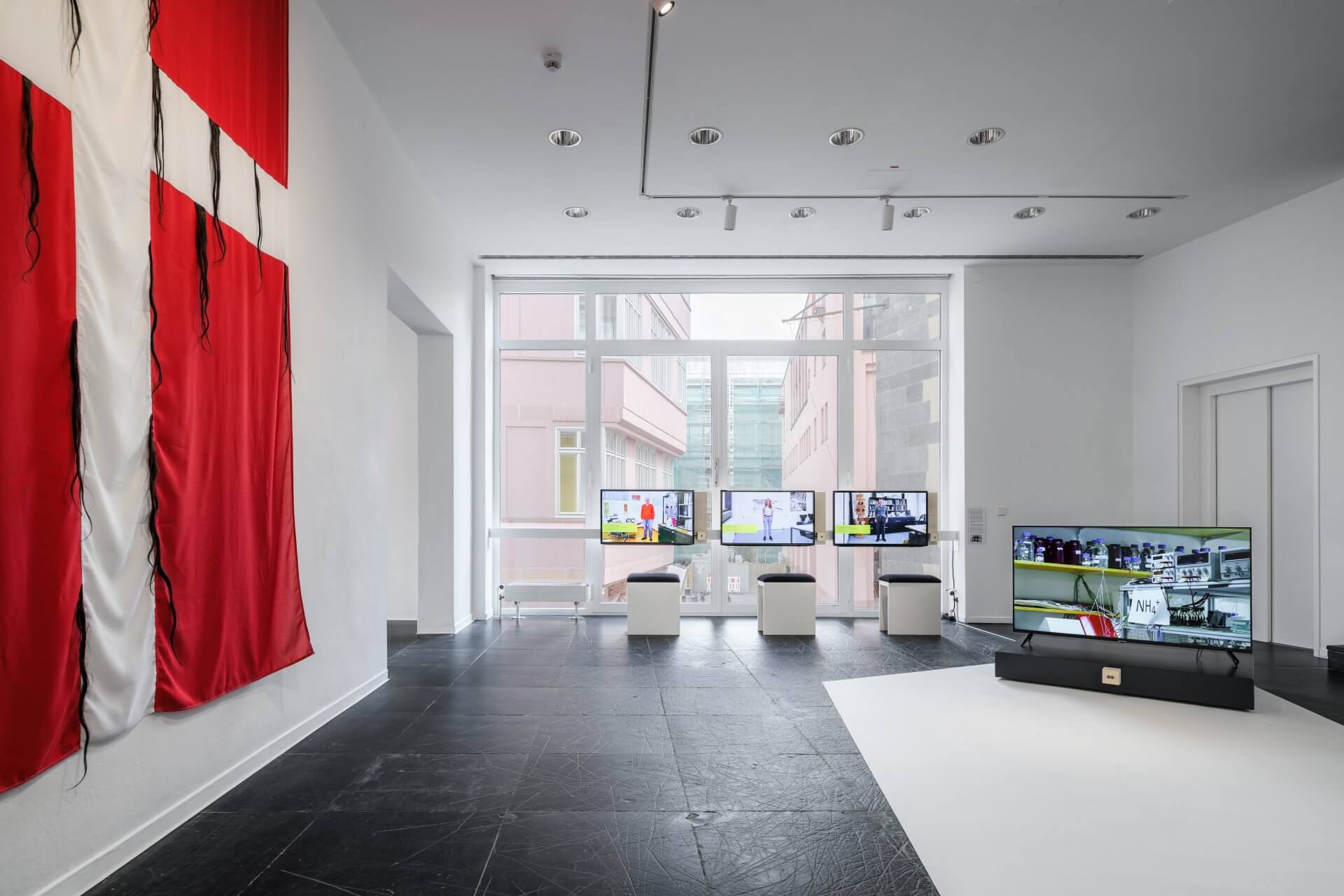
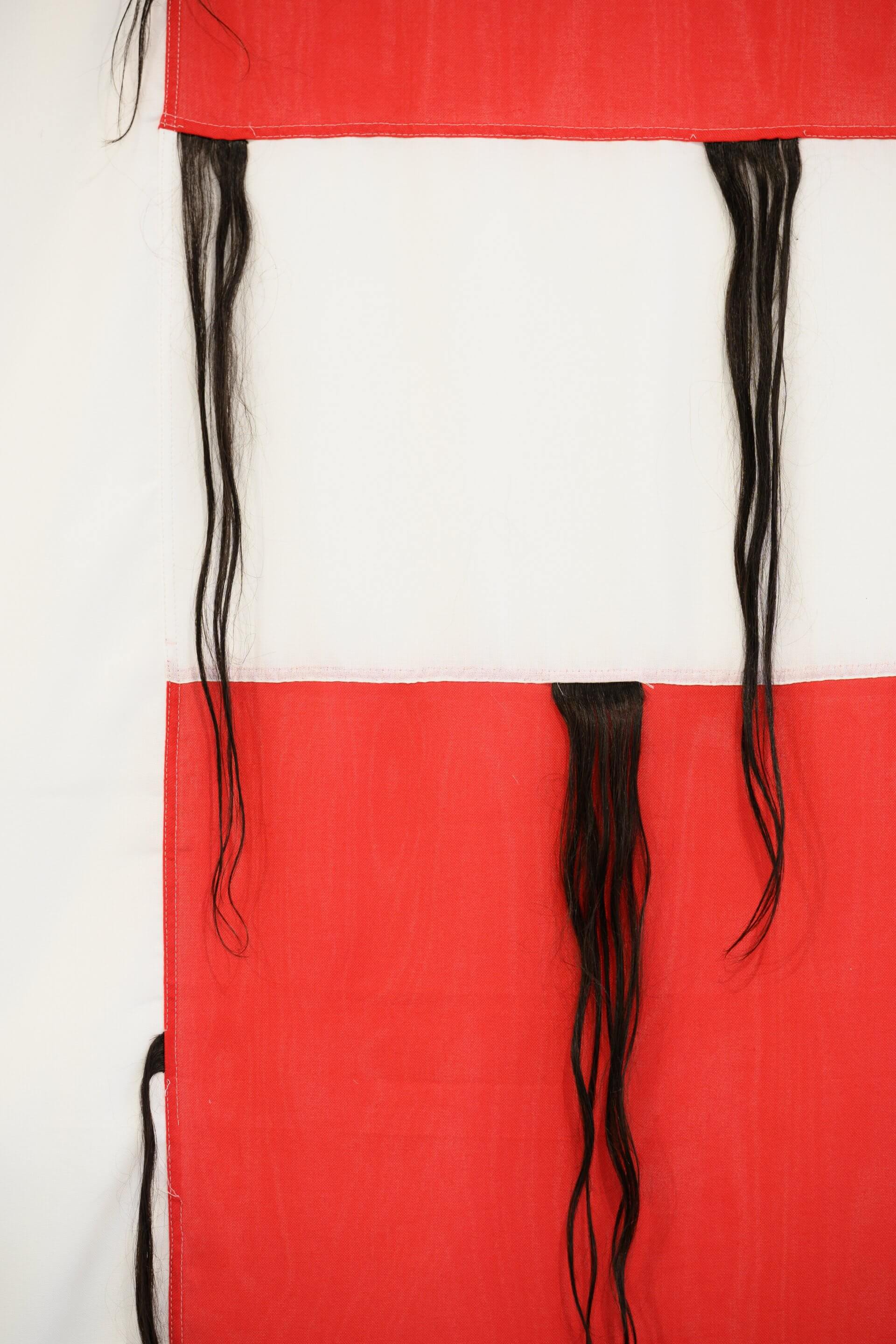
Nipangersitassaanngitsut (Those who can’t be silenced), 2017
Fabric, human hair
227 x 300 cm
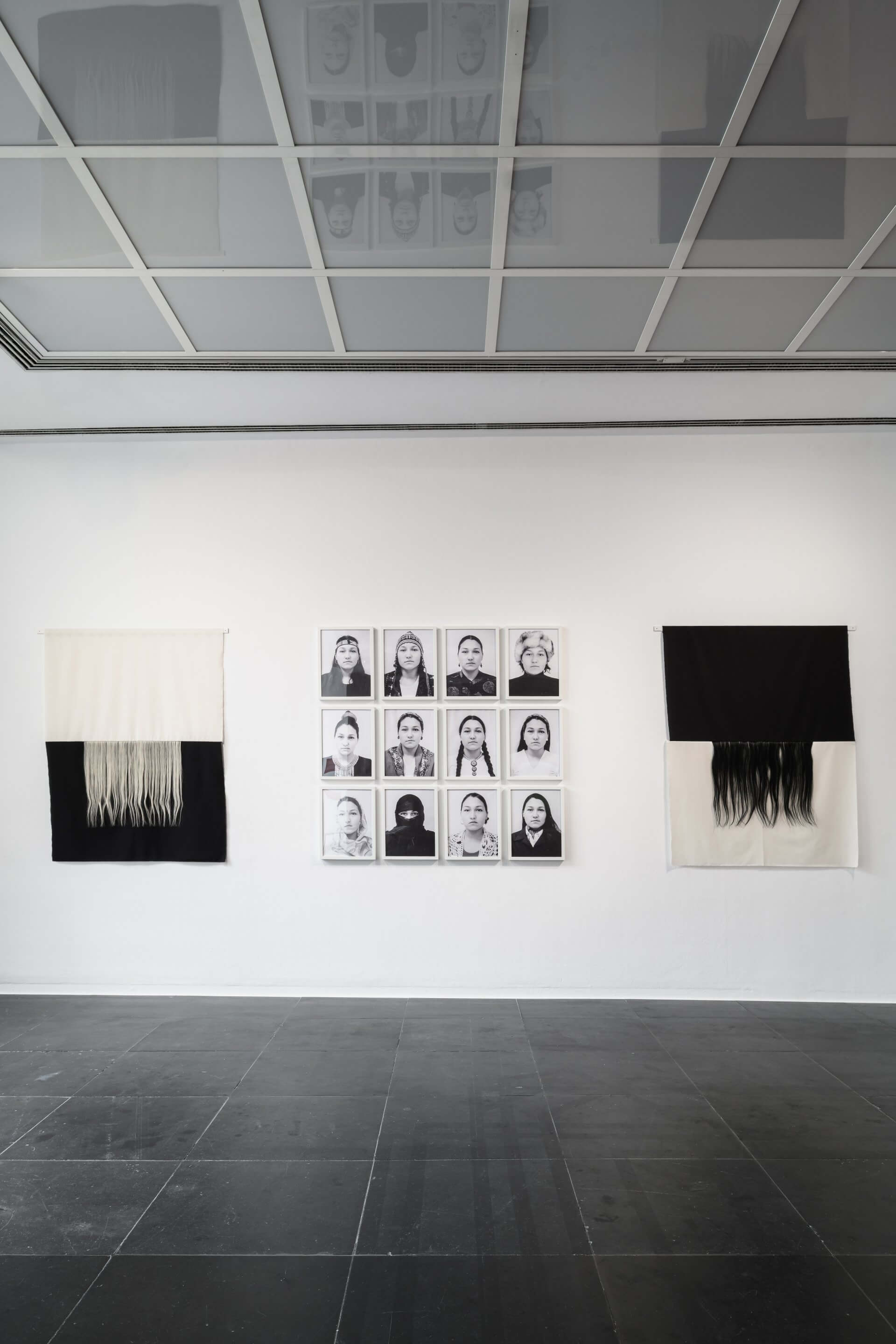
Meant to meet, 2024
Fabric, human hair
100 x 140 cm each
Whitewashed – heritage, 2021
Wood, human hair
3,5 x 70 cm each
Made in, #1, 1995
12 prints on paper, framed
30,5 x 40,5 cm each
Courtesy Julie Edel Hardenberg
“My mother was born under the Danish flag – Dannebrog, while Greenland was a colony.
I was born under the Danish flag – Dannebrog, while Greenland was a Danish county.
My children were born under the Greenlandic flag – Erfalasorput, while we had Greenland Home Rule Government.
Three generations. Three paradigms.” – Julie Edel Hardenberg
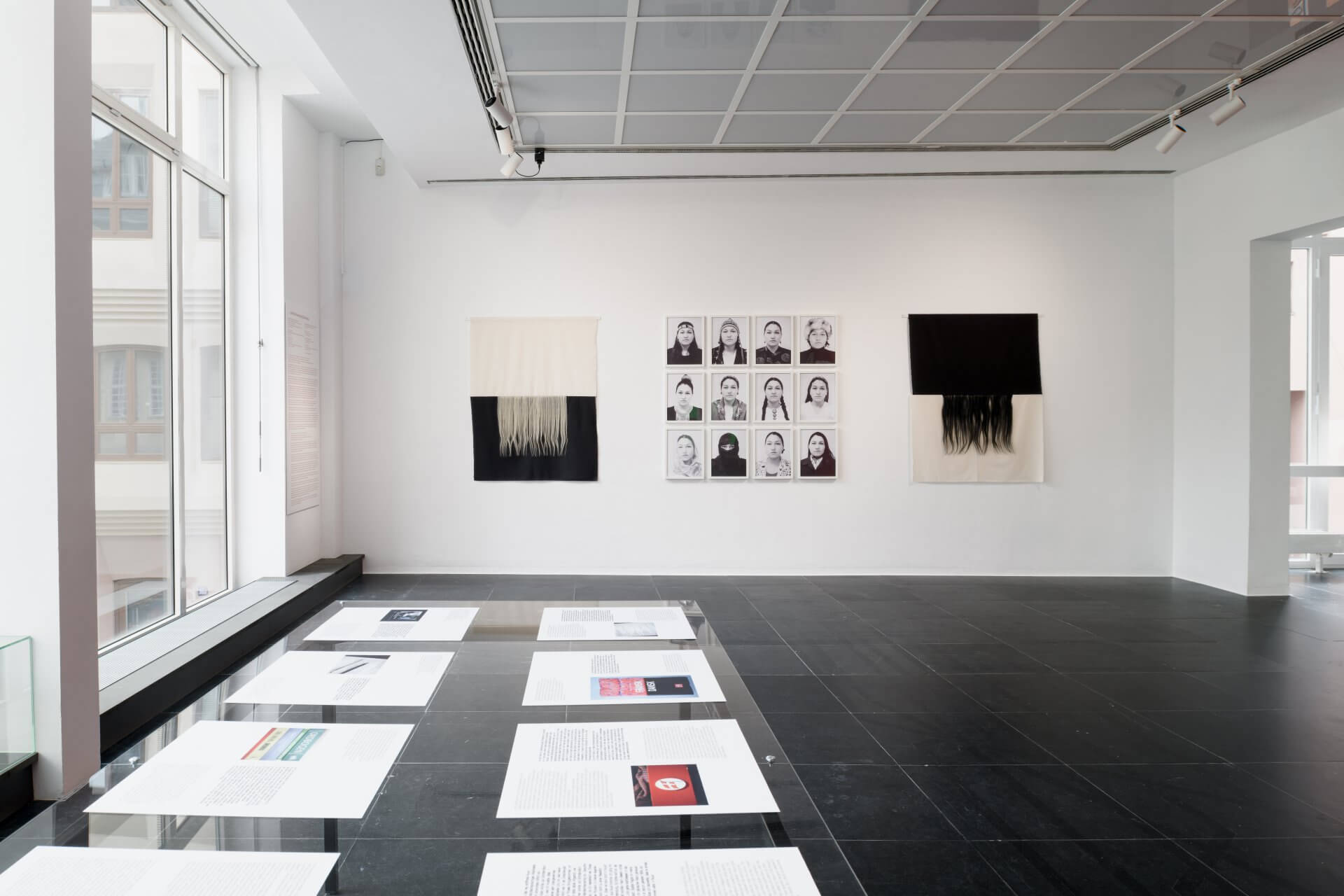
Julie Edel Hardenberg, called Paneraaq in Kalaallisut, was born in Nuuk in 1971. Her work engages with the history, Inuit cultures, and colonial experience of Greenland. Language plays a central role in this: Julie Hardenberg speaks Inuit Kalaallisut, Danish, Norwegian, English, and Swedish. This multilingualism enables the artist to understand diverse identities, as demonstrated in her early photographic work Made in, #1 (1995). In it, the artist portrays herself twelve times from the front in a passport photo format, altering her clothing and hairstyle. As a result, the viewer reads the same body through twelve entirely different cultural affiliations.
Hardenberg explores language as an expression of dominance and state power in the relationship between Greenland and Denmark. For her project Ikioqatigiilluta, Hardenberg places herself in everyday situations where she speaks exclusively in Kalaallisut and logs people’s reactions. Although Kalaallisut has been declared the sole official language in Greenland since 2009, Danish still prevails. The history of the Danish language in Greenland is inextricably linked to Danish colonial policy, the assimilation of the indigenous Inuit population, and the subsequent pursuit of cultural independence.
Denmark regularly occupies top positions in international rankings regarding quality of life, happiness, and friendliness. What remains unsaid is the colonial past and its impact on the people of Greenland. Consequently, this violent colonial history is downplayed, and Denmark is described as a “nice coloniser.” Hardenberg addresses and humorously condenses this fact in her work Unmask (2017). In this series, a traditional Inuit mask takes center stage on the poster. The mask always has its mouth bandaged. Hardenberg adds handwritten comments or calls to action in Kalaallisut—such as “Tamatta” (all together) or “Eqqartortigu” (let’s talk about it)—to individual political terms like “democracy” or “internal coloniser.”
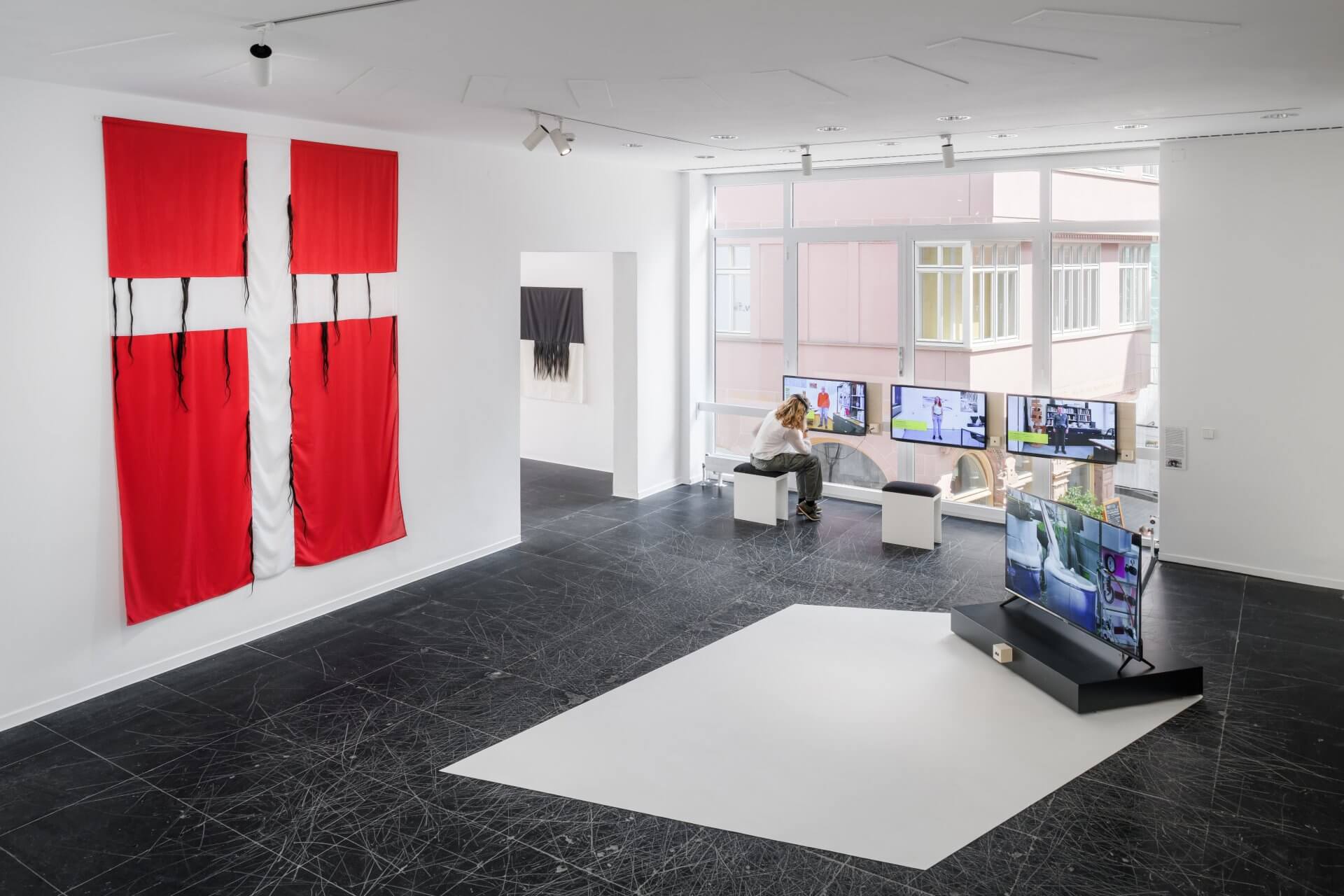
In the work Those who can’t be silenced – Nipangersitassaanngitsut, Julie Hardenberg sews black hair around the outlines of the white cross of the Danish flag. In postcolonial politics, black hair is a fiercely contested bodily feature. It reflects the struggle against the historical enforcement of Eurocentric beauty standards—a symbol bound up with power, identity, and resistance.
In Meant to meet from 2024, the binary division between black and white is at the heart of Hardenberg’s work. Black hair stands out against a white textile, and conversely, blonde hair against a black one. The stark divisions into colour zones symbolize political policies of exclusion and demarcation.
The 2021 work Whitewashed – heritage consists of two dish brushes lying side by side, one with black hair and one with blonde hair. Each brush contains a lock of the other hair color: black for Inuit and blond for Danish hair. Brushes are everyday objects used for cleaning. The cultural practice of whitewashing stems from a Western perspective and pressures non-white people to assimilate and to “cleanse” and alter their physical characteristics. By using the word Heritage, Hardenberg acknowledges the fact that people adapt culturally over time and adopt characteristics of other cultures. Sharp divisions and categories are not natural realities but human-made, ideological constructs.
Alongside her artistic work, Julie Hardenberg is a doctoral candidate and researcher at the University of Copenhagen and the Royal Danish Academy of Fine Arts. In addition to her academic texts, she writes literary works for children, which focus on narratives that strengthen cultural awareness and are written in the Kalaallisut language.
Julie Edel Hardenberg (*1971 Nuuk, GL), also known as Paneeraq, is an Inuk-Kalaaleq artist and researcher. She lives and works between Copenhagen (DK) and Nuuk (GL), and her artistic practice spans visual art, multimedia, and practice-based research. She is a PhD candidate at the Royal Danish Academy of Fine Arts, where she also completed her MA in Art Theory and Communication. She also studied art in Finland, Norway, and England. Hardenberg has published five books; her work has been exhibited internationally and has received several awards and nominations, including for the Nordic Council Literature Prize, the Carnegie Art Award, and the Anna Norlander Prize. In 2022, her contribution to the project Voices in the Shadows of Monuments was awarded a prize by the Danish Arts Council. Her works are held in the collections of Carlsberg Fonden (DK), the World Museum (NL), Statens Kunstfond (DK), Christiansborg (DK), Museet for Fotokunst (DK), Dansk-Grønlandsk Kulturfond (DK), the Greenland National Museum (GL), the Nordic Investment Bank (FI), and Musée de l’Élysée (CH).