





Oguz Sen
Immer ist Jetzt ist Hier, 2026
Spacial installations
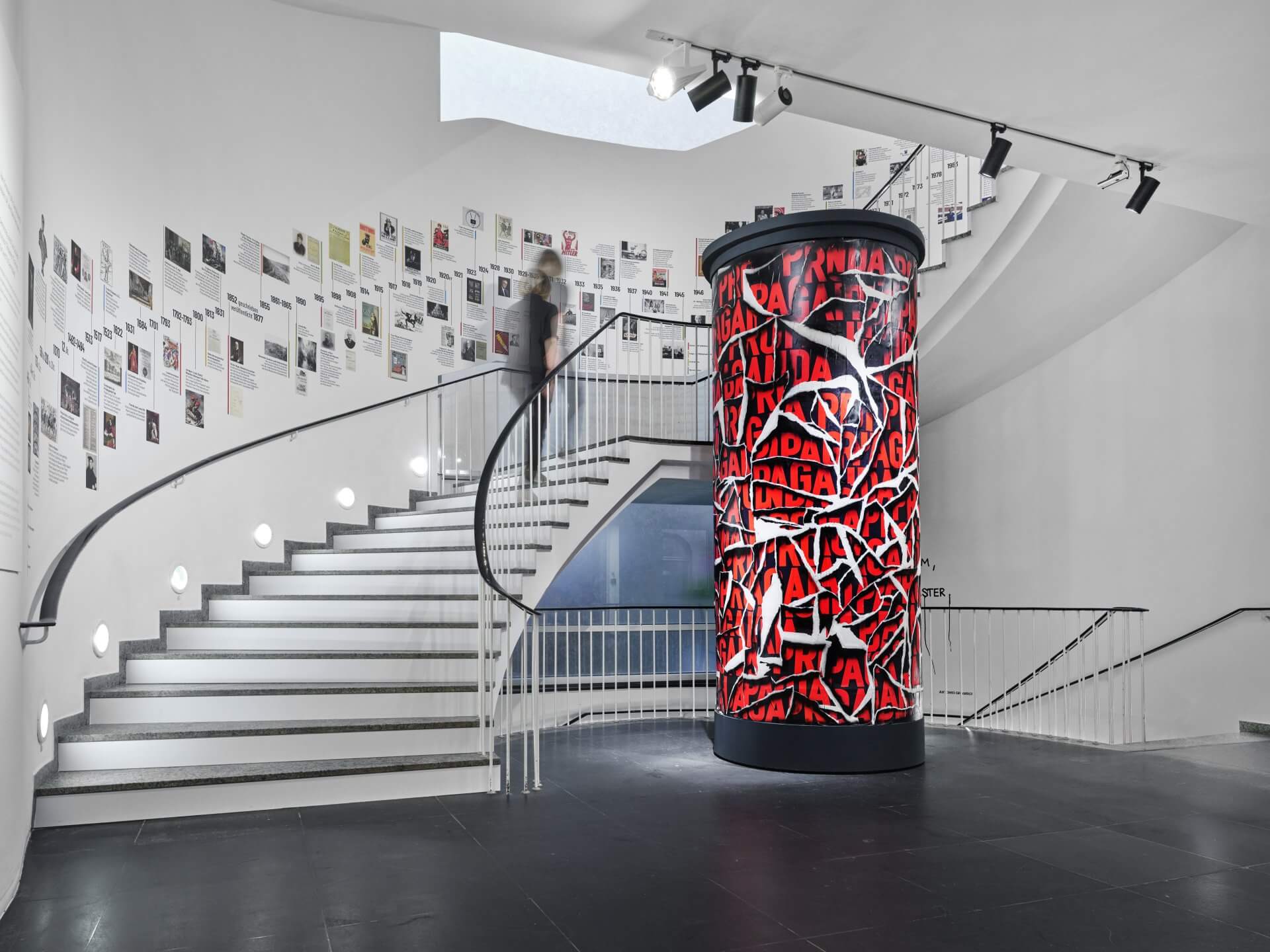
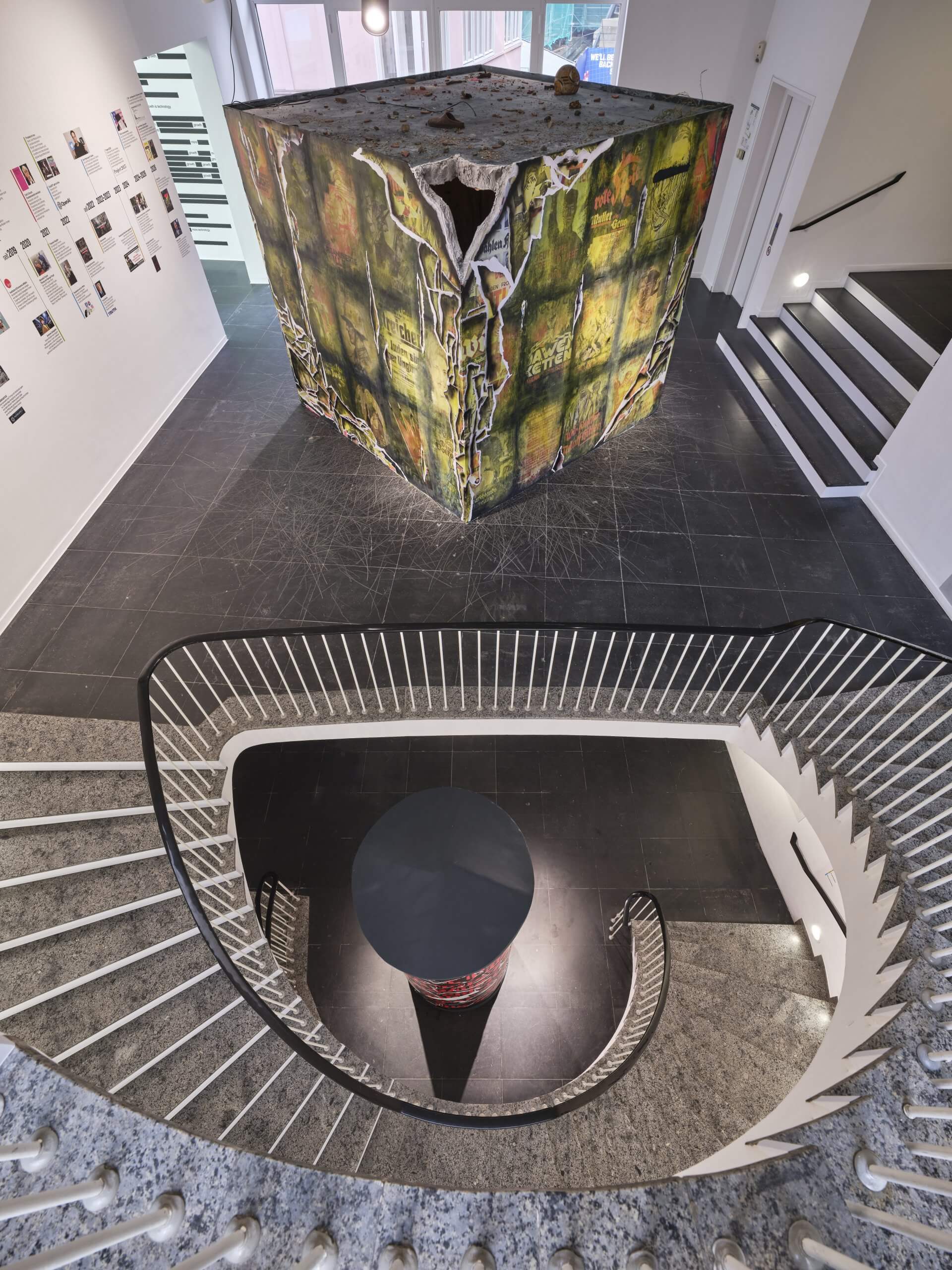
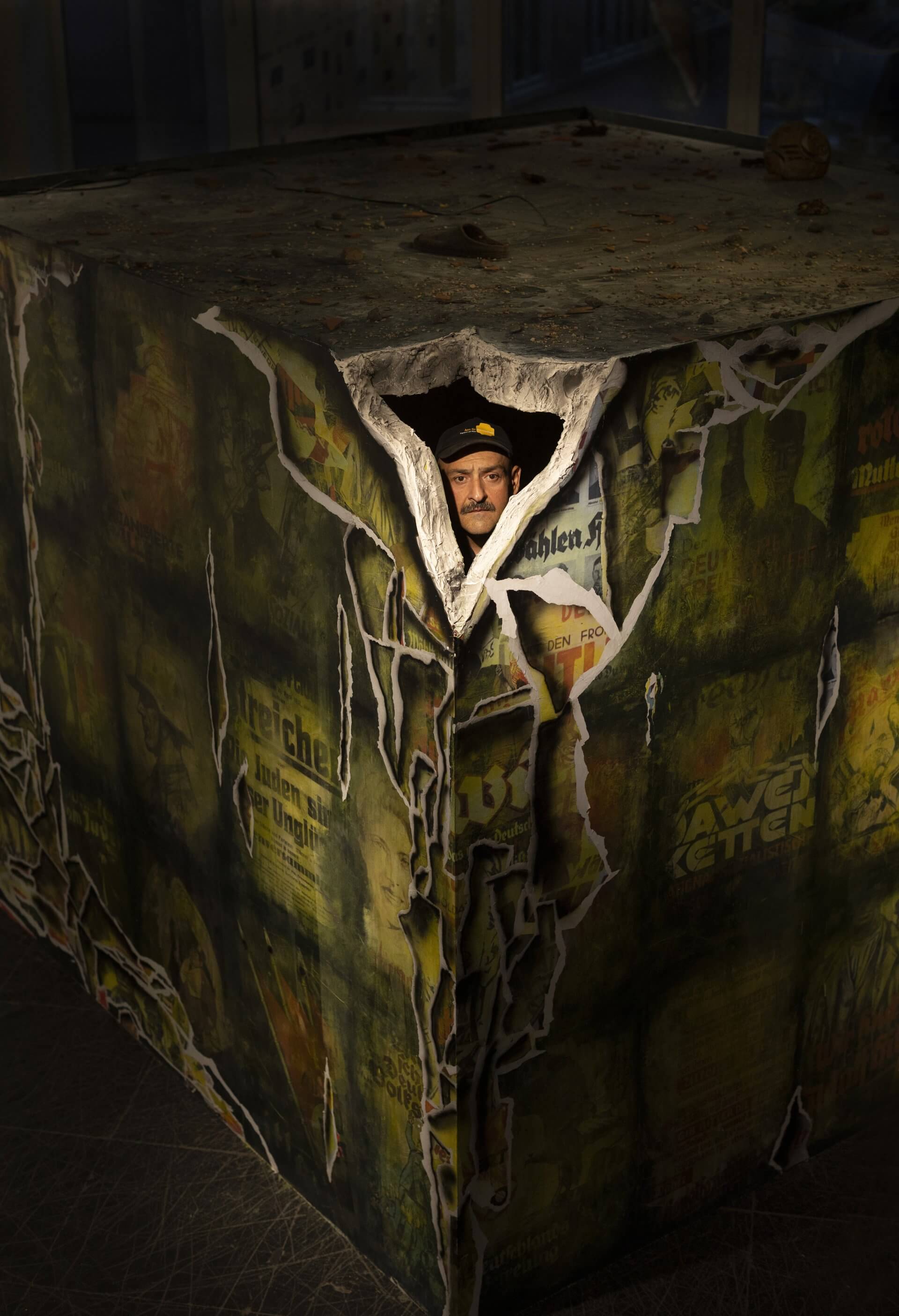
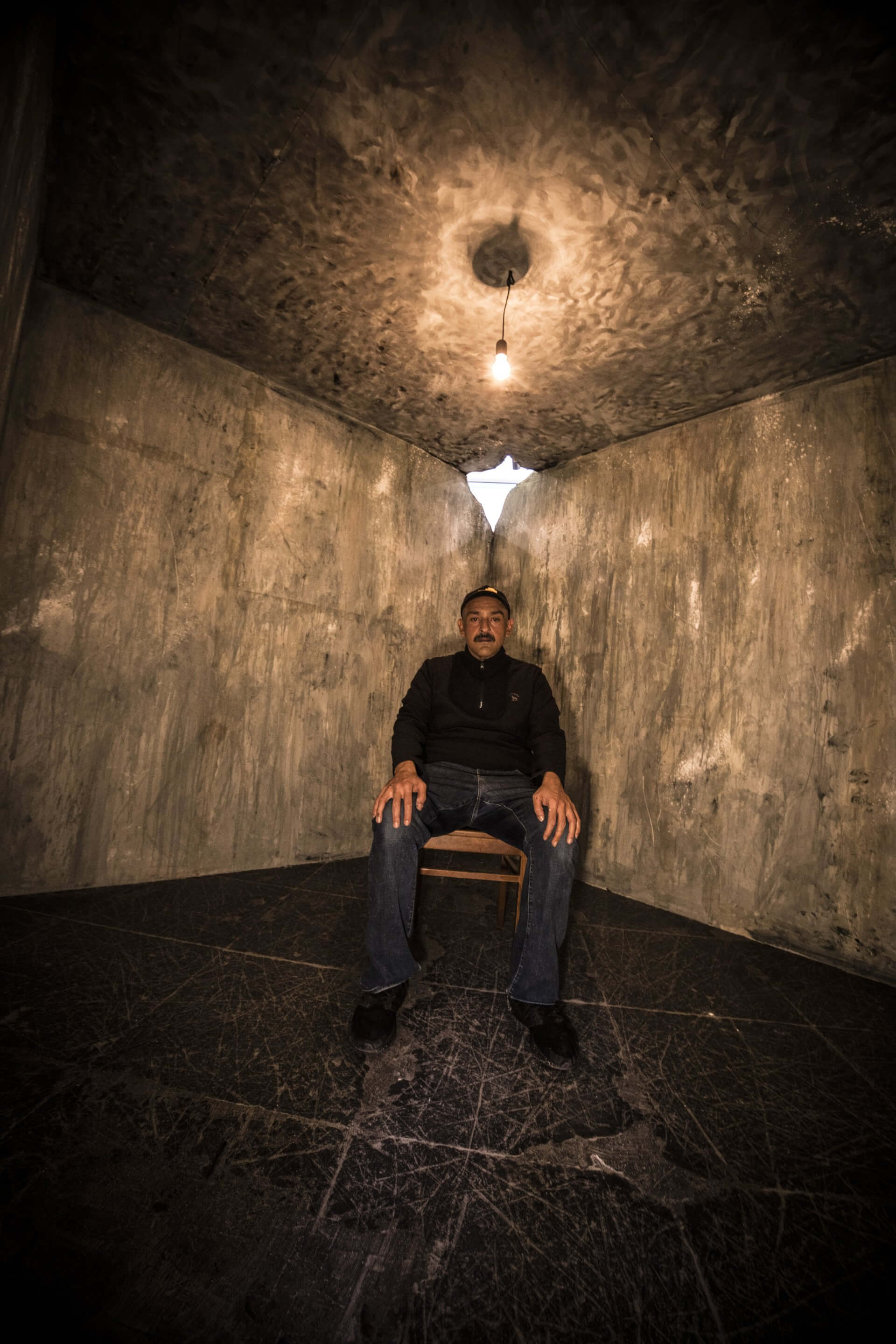
Immer ist Jetzt ist Hier, I, 2026
Wood, posters, plaster and airbrush
270 x 270 x 250 cm
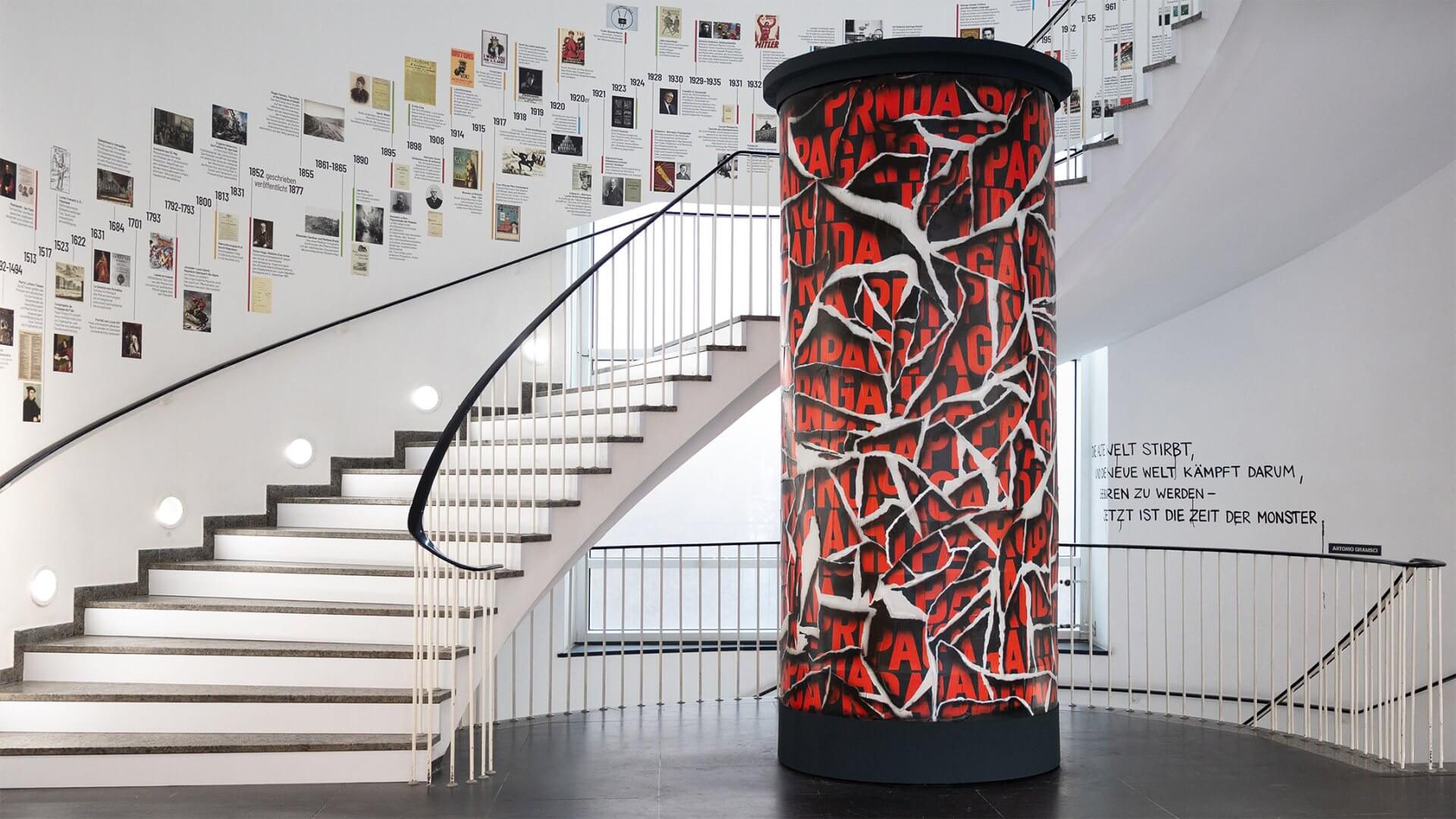
Immer ist Jetzt ist Hier, II, 2026
Wood, plaster and posters
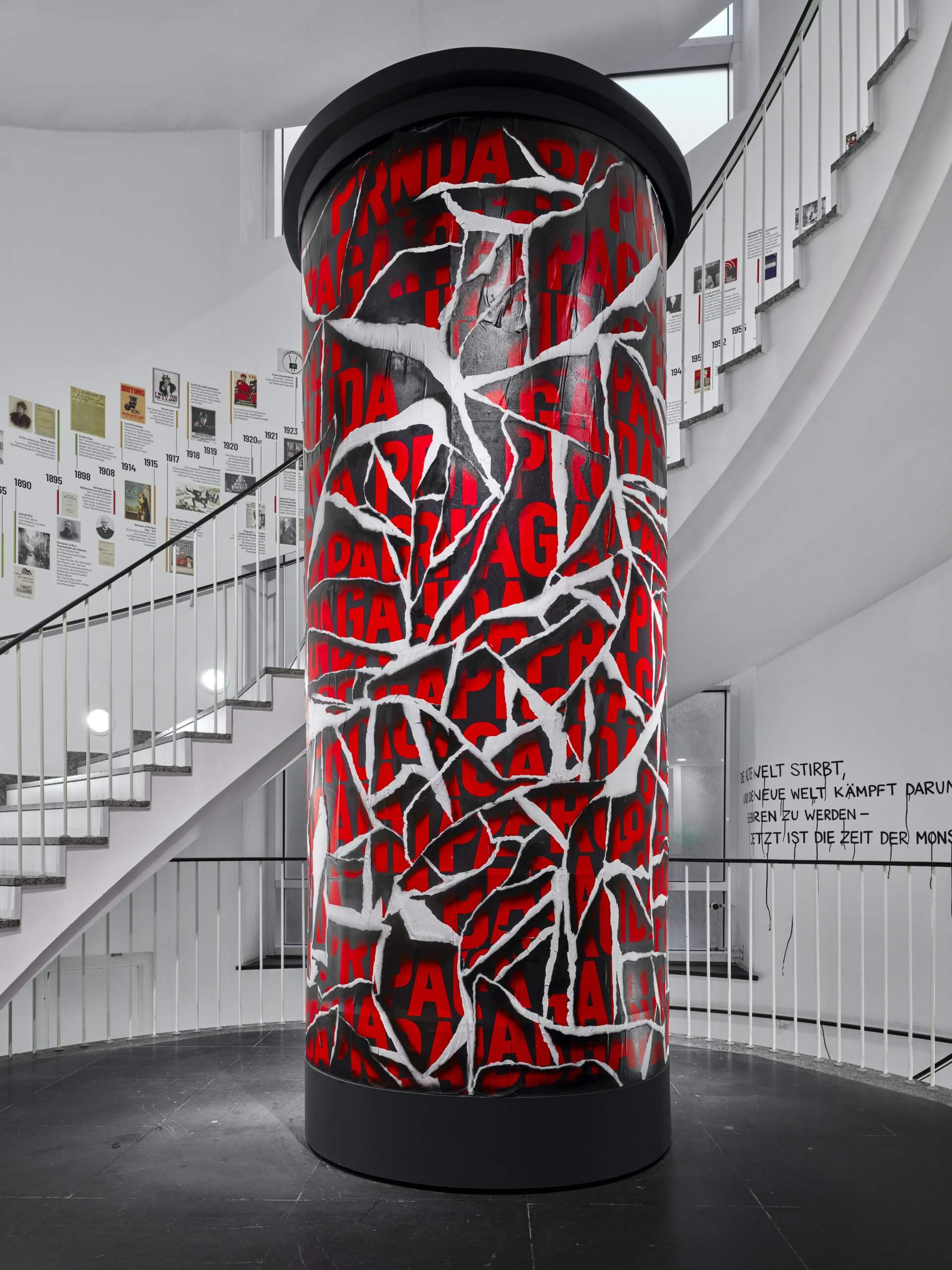
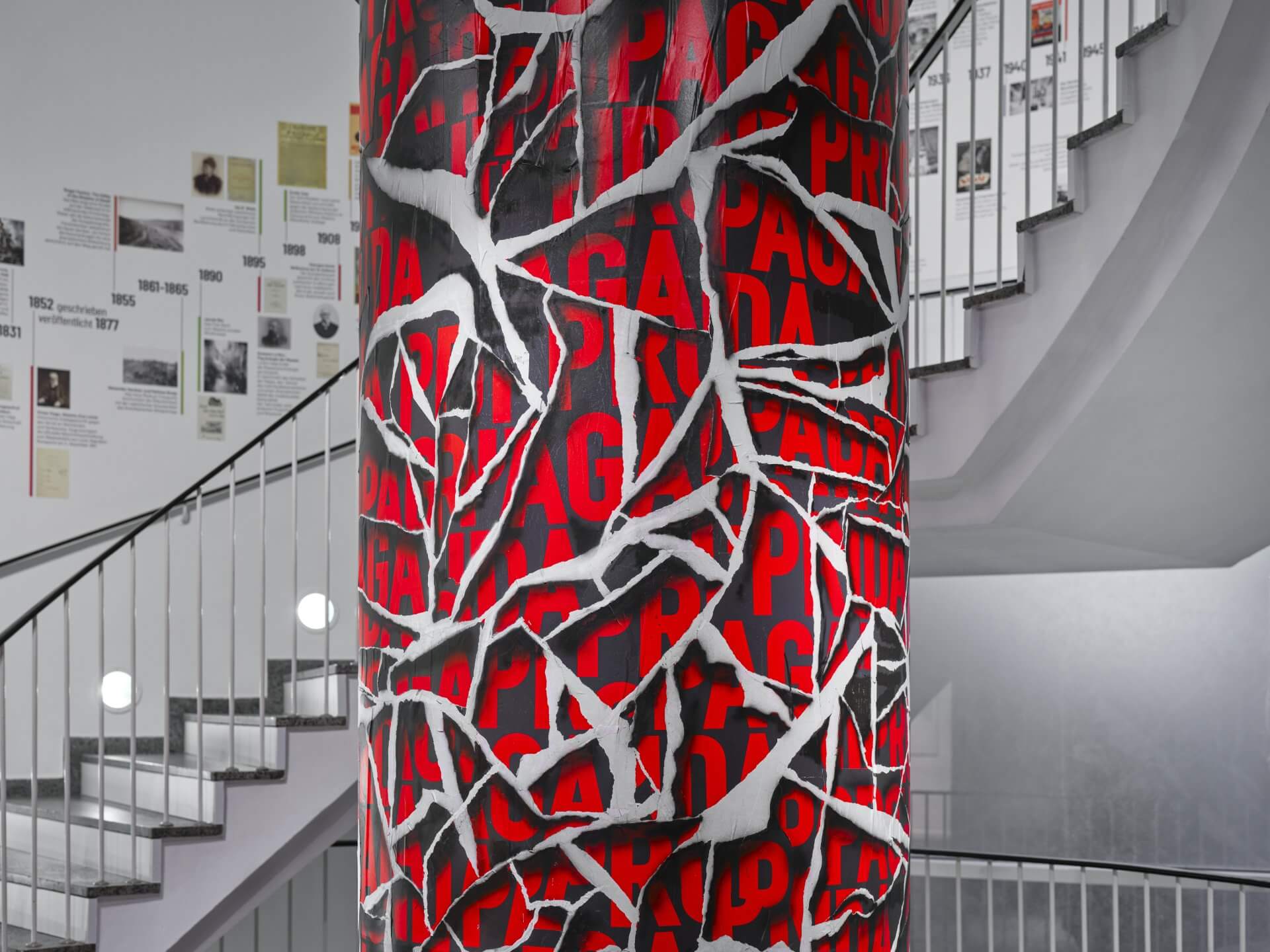
⌀ 120 x H 300 cm
Immer ist Jetzt ist Hier, III, 2026
Political banners and projection
Various sizes
Immer ist Jetzt ist Hier, IV, 2026
Marker on foil
Various sizes
Courtesy Oguz Sen
Oguz Sen is a painter, choreographer and activist. For this exhibition, he engages with the architecture of the Frankfurter Kunstverein across several levels. Immer ist Jetzt ist Hier is a series of four works created specifically for the exhibition: an accessible cube with a volume of 18 m³, a 3-metre-high cylindrical sculpture, graffiti on the building’s stairs and an installation of political banners.
The artist explores how the aesthetics and symbols of right-wing propaganda created for public spaces have changed over time. At the centre is the cube installation Immer ist Jetzt ist Hier, I. Sen builds a room within a room and pastes layer upon layer of political posters onto its outer walls, combining them into new visual constellations through controlled tearing. His material is drawn from the archives of German history, spanning the 1920s, the Nazi dictatorship and the present day.
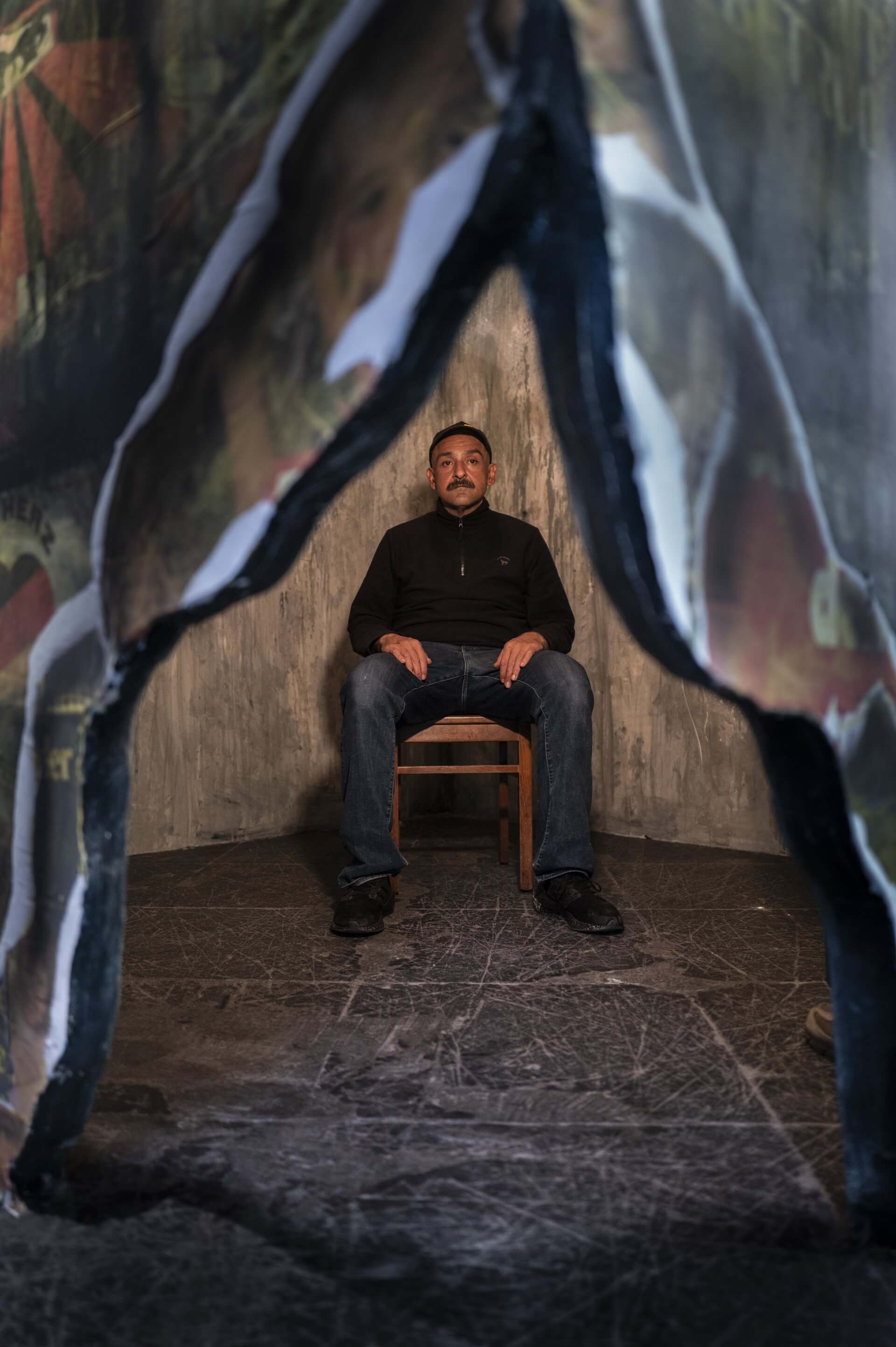
The cube has an opening close to the floor, where visitors must stoop to enter. The space bears the hallmarks of architectures of violence in which totalitarian systems, past and present, isolate, torture and systematically destroy people. It is cell-like, empty, cramped, dark and oppressive. The atmosphere inside the cube creates a stark contrast with the visual clamour of its outer walls, yet both reveal different faces of the same reality.
For Immer ist Jetzt ist Hier at the Frankfurter Kunstverein, Oguz Sen employs the techniques of décollage, contemporary freehand spraying (airbrushing) and tagging. Décollage involves deliberately tearing away upper layers to expose older posters, fragments of text, colours or images beneath, allowing new visual compositions and aesthetics to emerge. This art form originated in the French avant-garde movements of the 1950s – with artists who had survived the Second World War and the effects of totalitarian regimes: the construction of enemy images, the slogans and the military annihilation of human beings by other human beings. This confronted art with new challenges or, as Adorno wrote in 1949: “To write poetry after Auschwitz is barbaric.” Art sought words and images that still seemed possible after the existential shock of mass extermination. The French Affichistes established this art form through their use of posters found on city façades, laying the foundations for the conceptual art and street art of our time. Oguz Sen’s work at the Frankfurter Kunstverein draws on this tradition.
Sen sees himself as a painter and advocates an anti-elitist approach to art. His best-known paintings were created on the streets of his city. They serve as monumental political statements: the portrait of Alan Kurdi, the young refugee who drowned, painted in Frankfurt’s Osthafen district, and the 27-metre-long memorial mural beneath the Friedensbrücke commemorating the victims of the racist attack in Hanau in 2020.
For Immer ist Jetzt ist Hier, IV, Oguz Sen uses black markers to tag the words of thinkers from different eras onto the stair risers at the Frankfurter Kunstverein. Niccolò Machiavelli, Gustave Le Bon, Antonio Gramsci and Hannah Arendt all sought to understand the relationship between power, the masses and emotion. At the foot of the stairs, the artist places a three-metre-high sculpture resembling an advertising column. Sen has likewise covered it with political posters and used controlled tearing to create a décollage.
Oguz Sen’s art seeks to address people directly, involve them and bring them into relation with one another. He does this through his choice of materials, surfaces and locations, often in urban spaces. For Immer ist Jetzt ist Hier, III, the artist uses the very media through which he engages in political action, creating a densely layered space of banners made for political actions. These were made available to him by humanitarian and anti-fascist movements, initiatives and associations.
In spring 2026, Oguz Sen and Honji Wang created La La Land – Aufhören anzufangen for the Frankfurter Kunstverein as part of the exhibition Hidden History, curated by Heiner Blum. Children and young people who would not usually visit art spaces drew freely and playfully on the walls. What one group began was taken up, changed, expanded or overwritten by the next. Against the backdrop of an increasingly atomised society, art became a social project.
Oguz Sen’s practice continually opens up a broader possibility for art: to go beyond depicting or analysing public life and create spaces where people can act together, produce images and negotiate social reality collectively. His art both allows people to discover something new and brings them together.